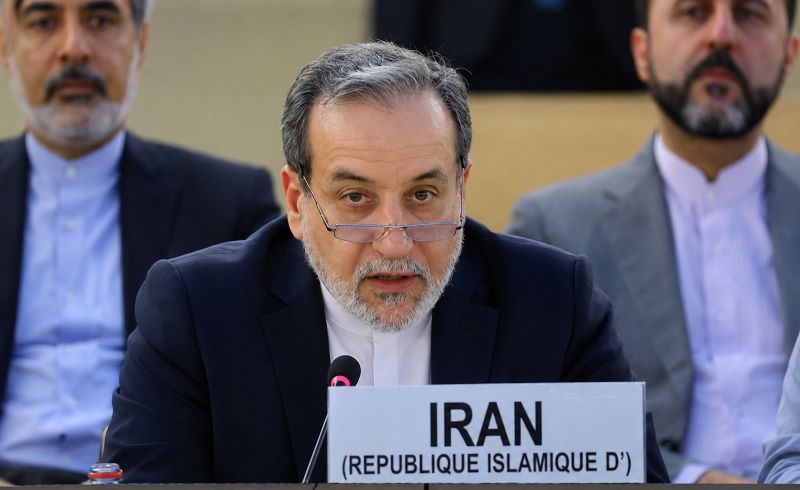
Iran has offered the United States a seven day plan to reopen the Strait of Hormuz and restore normal maritime traffic through one of the world’s most important energy routes, Foreign Minister Abbas Araqchi said on Saturday, according to Tasnim News Agency.
Speaking at the 52nd Council of Foreign Ministers of the Organisation of Islamic Cooperation (OIC) in Baghdad, Araqchi said Tehran had conveyed the proposal to Washington through Qatar, which has acted as a mediator between the two countries. He said the strait could be reopened within a week if the “necessary conditions” were met, adding: “The choice now rests with the United States.”
Iran has not published the full text of the plan. But Araqchi has previously said the seven-day period would begin once Washington formally accepted it. Reports say the proposal is linked to a return to the June 17 Islamabad Memorandum of Understanding, which was mediated by Pakistan with Qatari support.
Under that memorandum, Iran committed to facilitating the safe passage of commercial vessels through the Persian Gulf and the Strait of Hormuz. It also agreed to hold technical talks with Oman and other Gulf coastal states over the waterway’s future administration and maritime services.presidency.
Araqchi said maritime traffic had recovered to about 60 per cent of its pre-war level within two weeks of the agreement. He argued that later unilateral American measures and military action had prevented its full implementation.
The Iranian minister accused the United States and Israel of creating the current insecurity through military action, threats and a blockade. “You cannot bomb a country, threaten its annihilation and impose a blockade, and then expect the security of navigation to return to normal,” he said.
Washington has maintained that it supports freedom of navigation through the strait, while Tehran says it controls passage through Iranian waters and has warned vessels against using routes it considers unauthorised.
The Strait of Hormuz lies between Iran and Oman and connects the Persian Gulf with the Gulf of Oman. It is a critical passage for global oil and liquefied natural gas shipments, making any disruption a major concern for energy markets and international shipping.
Araqchi also said Iran remained ready for dialogue with the United States, but only on the basis of mutual respect and “credible guarantees” against renewed attacks. He said Iran would not surrender its sovereign rights under pressure.
His remarks came as regional diplomacy continues through Qatari and Omani channels. Tehran has previously said that, under its plan, certain US measures could be carried out within four or five days, the strait could reopen on the sixth day, and broader talks including on Iran’s nuclear programme could begin on the seventh.
The offer places the immediate decision before Washington: accept Iran’s conditions and test a rapid restoration of navigation, or maintain the pressure that Tehran says is keeping the waterway unstable.