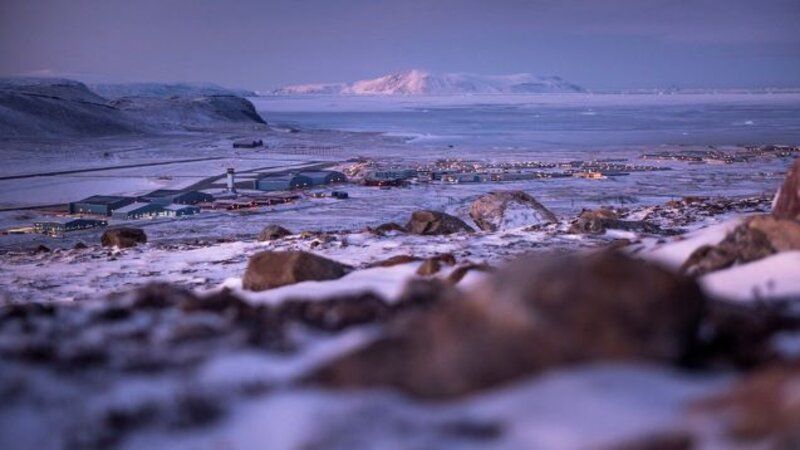
When Secretary of State Marco Rubio sits down with Danish and Greenlandic officials next week, Denmark will defend a territory that has been drifting toward independence for nearly half a century, a paradox now laid bare by President Trump’s threats to seize the Arctic island, according to Reuters.
Trump’s audacious claims have sparked European solidarity with Copenhagen, yet they’ve also exposed an uncomfortable truth: Denmark is marshaling diplomatic capital to protect a population that wants self-rule, and whose largest opposition party now seeks to bypass Denmark entirely and negotiate directly with Washington.
“Denmark risks exhausting its foreign policy capital to secure Greenland, only to watch it walk away afterwards,” warns Mikkel Vedby Rasmussen, a University of Copenhagen political scientist.
The stakes transcend Danish pride. Greenland’s strategic location between Europe and North America makes it indispensable to U.S. ballistic missile defense. Losing it would strip Denmark of its Arctic geopolitical relevance; the so-called “Greenland Card” that once allowed Copenhagen to maintain lower defense spending during the Cold War while punching above its weight in Washington.
Yet Greenland has been moving steadily toward independence since gaining autonomy in 1979. A 2009 agreement explicitly recognized Greenlanders’ right to self-determination. Every Greenlandic party supports eventual independence; they differ only on timing and method.
The financial burden is substantial. Denmark provides $610 million annually in block grants to an economy growing at just 0.2 percent, plus another $400 million covering police, justice, and defense. Last year, Copenhagen announced a $6.54 billion Arctic defense package after U.S. criticism of insufficient protection.
Prime Minister Mette Frederiksen faces a treacherous path. Standing firm maintains diplomatic credibility but risks alienating Washington when “Russia is an accelerating threat and being on the U.S.’s bad side is no good for anyone in the West,” notes researcher Serafima Andreeva.
The debate has been “drowned out by outrage at Trump’s threats,” Rasmussen observes. “I fear we have gone into patriotic overdrive.”
Meanwhile, some Danes question the calculus. “Why cling to this community when they so badly want out?” asks broadcaster Lone Frank.
The answer may ultimately rest not in Copenhagen, but in Nuuk.