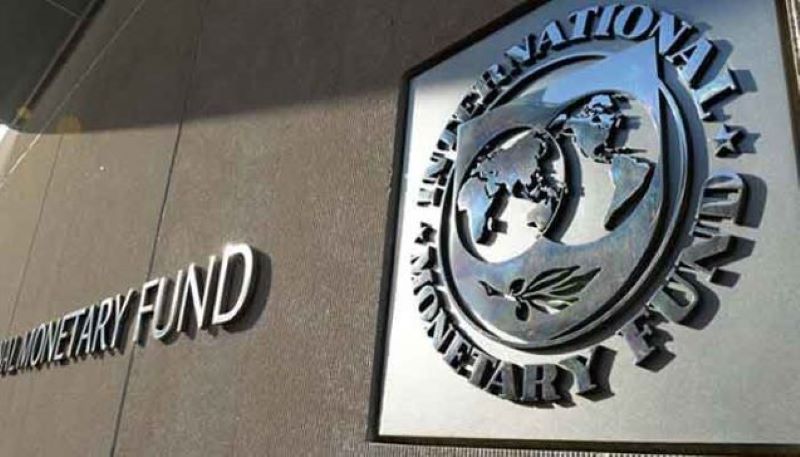
The global economy is balancing on a knife’s edge. The International Monetary Fund (IMF) has warned that unless peace soon returns to the Middle East, the world could slip dangerously close to another recession, according to BBC News.
In its latest World Economic Outlook, the IMF lays out a grim scenario. If soaring prices of oil, gas, and food continue through this year and next, world growth could fall below 2 percent in 2026, a threshold that signals serious trouble. Such downturns have occurred only four times since 1980, the last one during the chaos of the COVID-19 pandemic.
The crisis began just six weeks ago when fierce fighting erupted between the United States, Israel, and Iran. The fighting all but shut down the Strait of Hormuz; a narrow, vital channel through which much of the planet’s oil passes. Diplomatic talks collapsed, energy prices shot up, and investors panicked.
Oil rose briefly to nearly $120 a barrel before easing to around $99. But the IMF warns that in a worst-case scenario, it might still average $110 this year and surge to $125 by 2027. That would push global inflation toward 6 percent, forcing central banks to raise interest rates sharply. Growth would stall, jobs would vanish, and many developing nations could face food shortages.
IMF Chief Economist Pierre-Olivier Gourinchas likened the potential shock to the oil crisis of the 1970s, when Arab nations cut supply during the Yom Kippur War. Still, he offered a glimmer of relief — today’s economies rely less on oil than they did decades ago, meaning families might not feel the full sting of such turbulence.
If hostilities fade and oil shipments return to normal by midyear, the IMF expects growth to stabilize around 3.1 percent in 2026 before rising slightly to 3.2 percent in 2027. Though still below earlier forecasts, such a recovery could help avoid a global recession.
However, the pain won’t be shared equally. The United Kingdom may endure one of the steepest drops among rich nations, with growth shrinking to just 0.8 percent this year. In the Gulf, several countries face severe contractions: Iran’s economy could shrink by over 6 percent, while Qatar, hit by strikes on its LNG plants, could plunge nearly 9 percent. Iraq is predicted to fall by close to 7 percent.
Yet not all is bleak. Saudi Arabia may stay afloat thanks to new pipelines, and Russia might even profit from higher energy prices.
U.S. Treasury Secretary Scott Bessent admitted the turmoil would hurt but called it a necessary cost. “A small bit of economic pain,” he said, “is better than the risk of a nuclear-armed Iran.” His words captured the tense trade-off now shaping global markets: short-term suffering in exchange for long-term security.
For now, the world waits, hoping that the flames of conflict will cool before war dims the fragile light of economic recovery.