

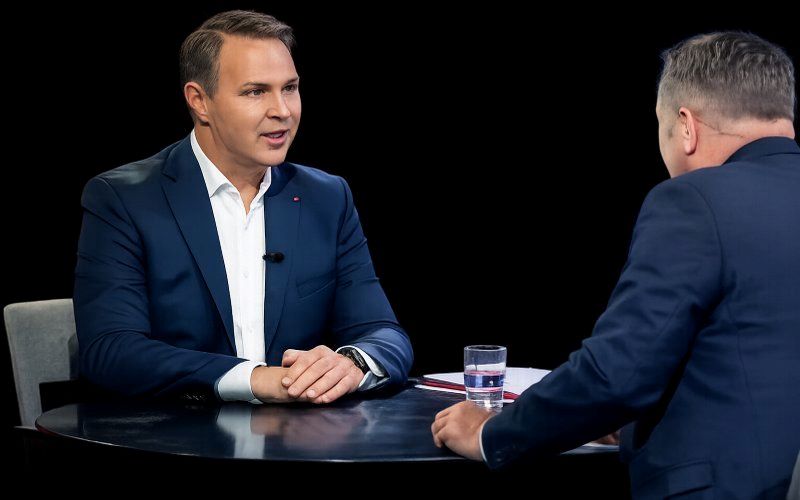
Austria’s political debate has intensified after Freedom Party (FPÖ) leader Herbert Kickl faced widespread criticism for comments about discipline in schools, with Vice Chancellor Andreas Babler leading the backlash.
The controversy began with Kickl’s May 1 speech in Linz, where he spoke nostalgically about the “good old days.” He said that in the past, children with migrant backgrounds were fewer in classrooms and were expected to integrate on their own. He added that when students did not follow rules, teachers—once respected authority figures—would sometimes “help a little,” a remark he accompanied with a hand gesture widely seen as mimicking a slap.
The comments triggered strong reactions across Austria. Parties including the SPÖ, ÖVP, and NEOS condemned the statement, and parliament passed a motion affirming that every child has the right to grow up free from violence, fear, and coercion.
But it was Andreas Babler, leader of the Social Democratic Party (SPÖ) and Vice Chancellor, who delivered the sharpest criticism. He said Kickl had “crossed a red line” by downplaying violence against children and glorifying a past where such actions were tolerated. Babler stressed that Austria must not return to those times, warning that any suggestion of physical punishment undermines children’s rights.
“Every child has the right to grow up without violence,” Babler said, calling on Kickl to apologize to families and children for what he described as a serious misstep. He added that anyone who questions this basic right should not hold public office.
The SPÖ has also launched a public petition, urging citizens to stand with civil society in defending child protection.
Experts echoed Babler’s concerns, warning that violence in childhood can lead to lasting psychological harm, including anxiety, depression, and low self-worth. They emphasized that while children need guidance and boundaries, these must never come through fear or force.
Kickl has denied supporting violence, saying his words were misunderstood. Still, the controversy continues to stir debate across Austria.





