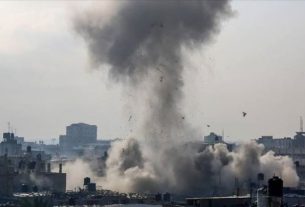
South Asia on Edge as Leaders Call for Restraint Amid Soaring Tensions
Pakistan’s Prime Minister Shehbaz Sharif issued a stern warning to India after deadly missile and drone strikes from its neighbour killed at least 31 civilians and damaged buildings in several Pakistani cities, reported by The Express Tribune. In a phone call with US Secretary of State Marco Rubio, Sharif said Pakistan “reserves the right to act in self-defence,” as per international law under Article 51 of the UN Charter.
The conversation came just hours after Pakistan’s military shot down 25 Israeli-made Harop drones—also called loitering munitions—reportedly sent by India. These drones targeted key urban areas, escalating tensions between the two nuclear-armed nations.
Sharif strongly condemned the attacks, calling them a “violation of sovereignty and territorial integrity” and warning that such unprovoked acts threaten peace in the entire South Asian region. “The people of Pakistan are outraged,” he said, adding that the country stands firm and prepared to defend itself.
Secretary Rubio urged both nations to de-escalate. He expressed sorrow over the recent terror attack in Pahalgam, India, but encouraged direct dialogue between New Delhi and Islamabad. “The US is committed to peace and stability in the region,” he added.
Meanwhile, Pakistan’s Deputy Prime Minister and Foreign Minister Ishaq Dar reached out to European Union’s foreign affairs chief Kaja Kallas. Dar also condemned the attacks, rejecting India’s claims that it was targeting terror bases. “There is no credible evidence linking Pakistan to the Pahalgam attack,” he insisted.
Kallas expressed condolences for the civilian deaths and stressed that both countries should turn to diplomacy instead of violence.
As tensions run high and blackouts continue in several regions, the international community is watching closely, hoping for a peaceful resolution before the situation spins further out of control.