

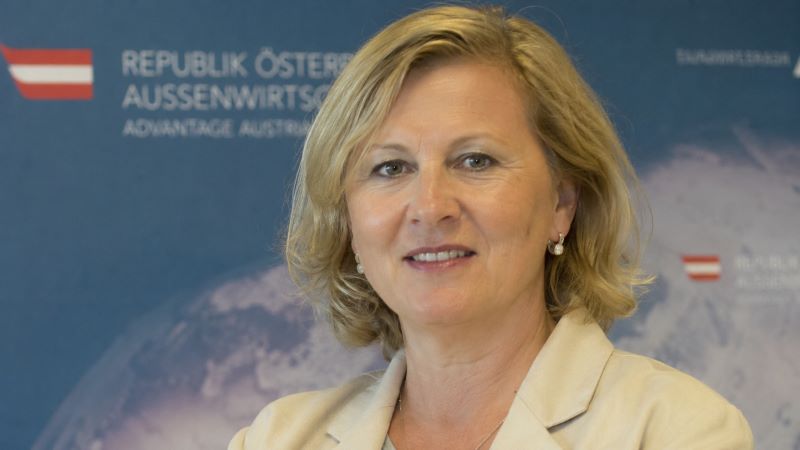
Elisabeth Mindlberger, Austria’s trade representative in Moscow, has been told to leave Russia by the end of this week. The decision, confirmed by Austria’s Foreign Ministry and the Austrian Federal Economic Chamber, adds a new strain to already fragile relations between Vienna and Moscow.
According to a report by the Austrian newspaper Die Presse, Russia may have decided to expel Mindlberger more than two weeks ago before Austria recently declared four Russian diplomats persona non grata over suspected espionage. Austria’s Foreign Ministry said it saw “no justification whatsoever” for Moscow’s move.
Mindlberger’s posting in Russia appears to have been difficult from the start. She had reportedly waited a full year for her entry visa before beginning work in Moscow last year. Austria, in turn, had delayed the entry of Russia’s designated trade representative for about a year. Moscow eventually issued Mindlberger a visa after Austria promised reciprocal treatment, though the Russian official has reportedly still not received one.
The episode underscores how political tensions continue to narrow the space for ordinary diplomatic and economic contact. Trade representatives are not ambassadors, but they often serve as practical bridges between businesses, regulators and governments roles that become more valuable, not less, when formal relations cool.
Former Austrian foreign minister Karin Kneissl, who now works in Russia, warned against letting communication collapse. “Diplomatic channels should always be maintained,” she told the Russian state news agency RIA Novosti. “In difficult times, you need them even more.” Her remarks captured a wider concern: that each expulsion, delay and withheld visa makes future dialogue harder to rebuild.
For now, Austria has protested the decision but has not announced a reciprocal expulsion. The immediate consequence is clear; another channel between Vienna and Moscow is closing.





