New Delhi, October 15: Indian Prime Minister Narendra Modi on Thursday virtually inaugurated five major development initiatives worth around Rs 33.5 billion in Ladakh, focusing on air travel, strategic road connectivity, electricity, water conservation and the protection of ancient heritage.
Ladakh, like Gilgit-Baltistan, formed part of the former princely state of Jammu and Kashmir before the political and territorial changes that followed the 1947 disputed Partition of the Indian subcontinent. The region remains part of the wider historical and political legacy of Jammu and Kashmir, a region marked by decades of dispute and competing claims.
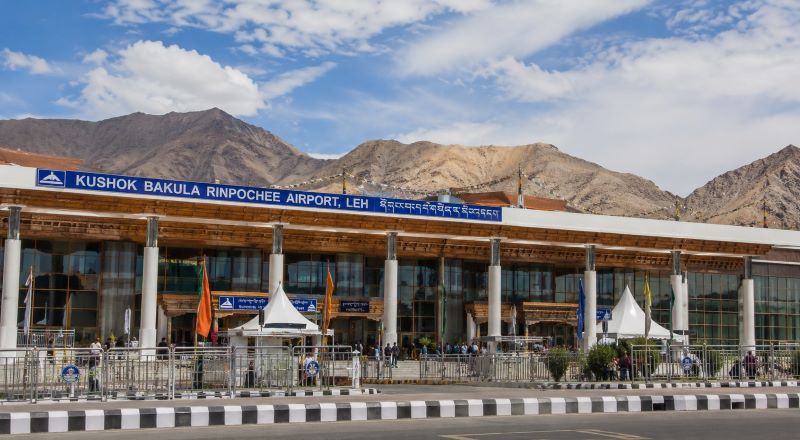
Among the key projects is a new passenger terminal at Kushok Bakula Rimpochee Airport in Leh, built at a cost of Rs 640 crore. Spread across 23,800 square metres, the terminal is designed to handle up to 3.5 million passengers annually, reported by the Greater Kashmir News. Equipped with geothermal energy technology and features reflecting Ladakh’s cultural heritage, the facility aims to improve air connectivity while reducing its environmental footprint.
Modi also dedicated the 298 kilometre Nimmu-Padum-Darcha Road to the nation. Built by the Border Roads Organisation, the route passes through the remote Zanskar Valley and crosses the challenging Himalayan terrain near Shinkun La Pass. It offers an alternative link to Ladakh, strengthening military logistics while improving residents’ access to healthcare, education and markets.
The prime minister also inaugurated the 9 megawatt Hanu small hydropower project and a 66 kilovolt transmission line to improve electricity supply and support the region’s energy needs.
In a step towards preserving the past, India’s first Petroglyph Conservation Park was opened at Sindhu Ghat in Leh. Its purpose is to protect ancient rock carvings that reveal glimpses of early human life in the region.
Meanwhile, 40 water bodies developed across 40 villages under Project Him Sarovar were inaugurated to address seasonal water shortages. By storing water when supplies are available, the initiative aims to support farming and strengthen long term water security.
Together, the projects seek to address Ladakh’s difficult geography and harsh climate, where roads, reliable electricity and water are essential to everyday life.