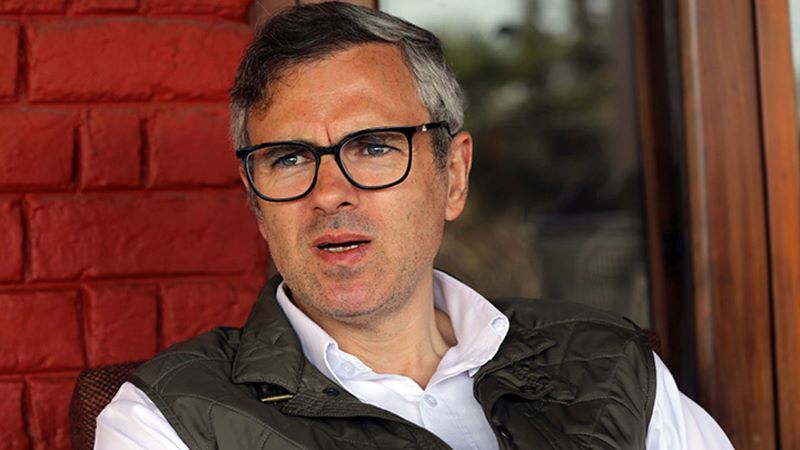
On Independence Day, Jammu and Kashmir Chief Minister Omar Abdullah delivered a blistering speech in Srinagar, rejecting the notion that terrorist attacks should influence the region’s political status and pledging to take the fight for statehood directly to the people, reported by J&K Media News.
His remarks followed a Supreme Court observation that “incidents like Pahalgam” must be weighed when deciding on restoring statehood. On April 22, Pakistani militants killed 26 civilians, mostly tourists, in the Baisaran meadow near Pahalgam. Abdullah called the linkage “unfortunate,” asking, “Will the killers of Pahalgam and their masters in the neighboring country decide whether we will be a state?”
Speaking from Bakshi Stadium, Abdullah argued that Jammu and Kashmir’s residents should not be “punished” for crimes committed by outsiders, noting that citizens from Kathua to Kupwara condemned the Pahalgam attack without prompting. He insisted that elected governments had consistently reduced militancy and could handle security without losing statehood.
Abdullah announced an eight-week, door-to-door signature campaign across all 90 assembly constituencies to demonstrate overwhelming public demand for restoring statehood. Participants will be asked a single question: “Do you want to make Jammu and Kashmir a state again or not?” The signatures, he said, would be submitted to both the central government and the Supreme Court as proof of a popular mandate.
In a candid, unscripted address—his first Independence Day speech since J&K’s downgrade to a union territory—Abdullah reflected on the loss of the region’s identity, flag, constitution, and autonomy since his tenure as chief minister from 2009 to 2014. He likened the current governance model to “a horse with its front legs tied,” warning it was “not a system for success, but for failure.”
The chief minister accused the bureaucracy of undermining elected authority, breaking what he called the “triple chain of accountability” linking the government, the legislature, and the people. Cabinet decisions, he claimed, are often altered or blocked without consent, raising doubts about the purpose of having an elected government without real powers.
Despite fading hopes for a major announcement from New Delhi, Abdullah vowed not to accept the status quo. “We will get justice… and we will rest only after that, by God’s will,” he declared, his voice mixing defiance with resolve.