

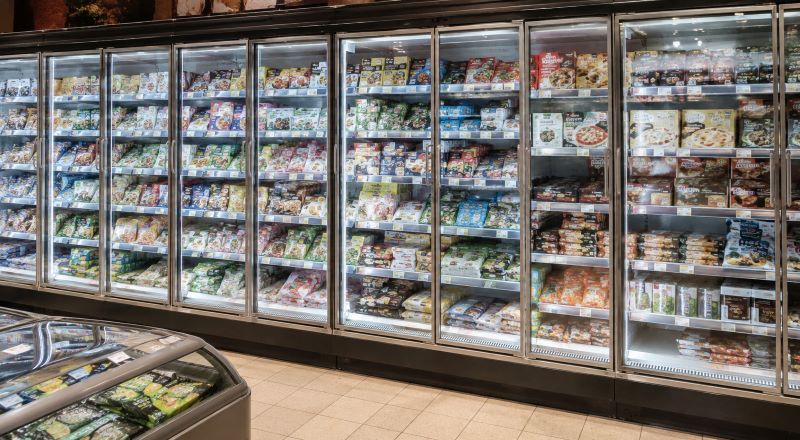
A cyber attack has disrupted supermarkets across seven European countries, forcing stores to discard food after hackers tampered with refrigerators and freezers, reported by BBC News.
Around 40 Delhaize shops in Belgium and Luxembourg were affected, along with stores in Sweden, Ireland, the Netherlands, Estonia and Finland. In several locations, freezer temperatures reportedly climbed to 50C (122F).
Sabcobel, the Belgian maker of some affected units, said attackers switched evaporators to defrost mode, causing the appliances to warm. The method appears similar to last month’s attack on hundreds of French supermarkets, where food worth millions of euros was reportedly destroyed.
Sabcobel chief executive Stephan Moelans said staff worked overnight to disconnect affected systems from the network. Since the French incident, the company has tried to protect customers’ refrigerators, but he said physical modifications, not just software updates, are needed.
Most European supermarkets connect refrigeration systems to the internet so maintenance can be carried out remotely. Moelans said secure connections are the simplest solution, and many businesses adopted them after the French attack.
The attackers remain unknown. Belgian and Swedish cyber security agencies are monitoring the case, while the UK’s National Cyber Security Centre is working with international partners. No UK incidents have been reported.
The financial damage is already substantial. A Delhaize branch in Hoeilaart, Belgium, estimated losses of €100,000 in produce, excluding the cost of closing. Carrefour said 15 Belgian stores were affected, Colruyt reported five Spar shops, and Ikea confirmed an incident at its Mons store.
In Sweden, ICA and Coop stores were also targeted. One ICA branch in Sjöbo said hackers had set its fridges and freezers to 50 degrees overnight. Coop said seven of its 800 stores were affected but the situation was under control.
Refrigeration faults were detected in Finnish K-stores, 13 SuperValu supermarkets in Ireland, and at least 17 Dutch companies, including butcher shops and small neighbourhood stores. A Selver supermarket in Estonia was also affected.
In the United States, authorities are investigating similar malfunctions at military bases in August and working with French officials to determine whether the cases are connected.
The attack is a stark reminder that even everyday appliances can become targets in an increasingly connected world.





