

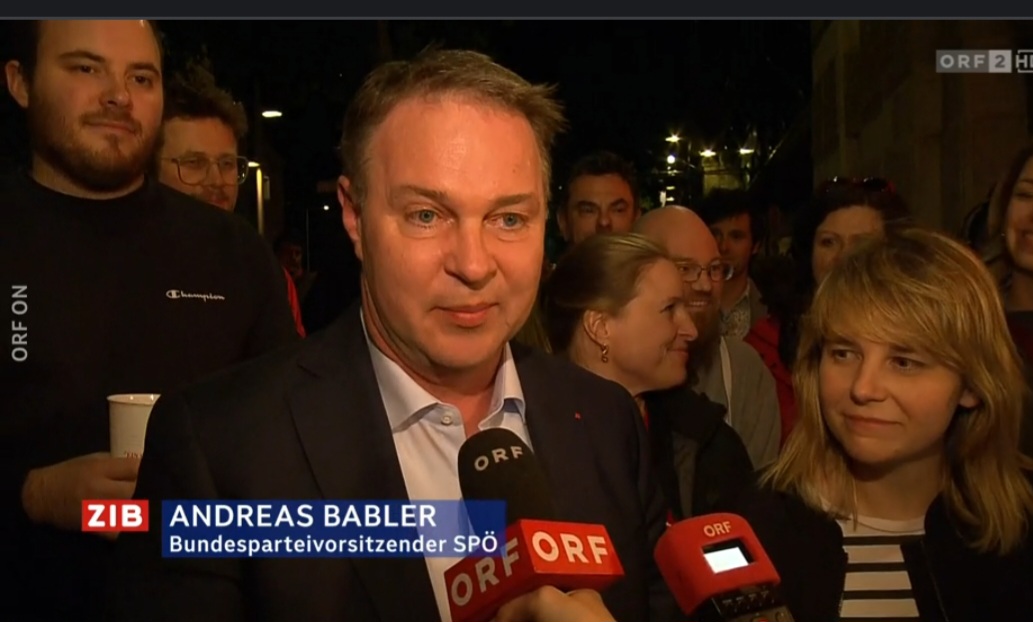
The SPÖ (Social Democratic Party of Austria) celebrated an early electoral victory after the first projections of Vienna’s municipal elections were released. Mayor Michael Ludwig, alongside members of the city government and key figures from the party, watched the results unfold in the Red Salon of the City Hall. The projections showed promising figures, and when the bar graphs appeared on the screen, the room erupted in cheers.
While no official statements were made at that moment, the mood among the gathered party leaders was one of palpable relief. The results exceeded the expectations set by earlier trend forecasts, even though they remained within the predicted margin.
Barbara Novak, Secretary of the SPÖ’s regional party, expressed cautious optimism following the publication of the trend calculations. “Not a single vote has been counted yet,” she reminded everyone, emphasizing the long evening ahead. She also affirmed that the SPÖ was the leading party in terms of voter support and predicted that Ludwig would likely remain the mayor of the capital city.
Meanwhile, Heinz-Christian Strache’s political comeback continued to falter. Once a prominent figure as the former Vice Chancellor, Strache’s campaign now appears out of touch with current political dynamics. Despite his attempts to rally voters by warning against “over-foreignization” and criticizing immigrants, his efforts have failed to regain significant traction. His political message, heavily reminiscent of his days as leader of the Freedom Party (FPÖ), has lost its appeal, and he faced a devastating setback as he failed to secure a seat in the Vienna City Council.
In contrast, the Communist Party (KPÖ), in a coalition with the small Left party, made significant inroads with a platform focused on social justice issues, such as affordable housing, energy prices, and public transportation rights for all residents, regardless of citizenship. Despite their efforts, they narrowly missed the 5% threshold required to enter the City Council, an achievement nonetheless considered a notable success for the party in a competitive political landscape.
The Green Party, which has been striving for a return to power, also performed well, securing 14.7% of the vote, nearly matching their previous record from 2020. This result puts them in third place, behind the SPÖ and the FPÖ. In their election night celebration, Green representatives celebrated what they called a “sensation,” noting that their strong performance could pave the way for future coalition talks.
The Neos, a liberal party, also experienced a surge, garnering 9.6% of the vote, marking a significant increase compared to their previous performance. Their improved standing suggests that the current coalition, comprising the SPÖ and Neos, could potentially continue, despite initial concerns.
Finally, the FPÖ made considerable gains, tripling its vote share compared to 2020. However, despite this achievement, they remain firmly in opposition, as SPÖ Mayor Ludwig is unlikely to engage in coalition talks with the far-right party.
In sum, the initial projections suggest that Vienna’s political landscape is poised for continued shifts, with significant implications for coalition dynamics and future governance.





