Ten years after CPEC’s launch, Balochistan remains neglected despite promises of development, exposing deep governance failures, regional inequalities, and the urgent need for fair investment
It has been ten years since the launch of the China-Pakistan Economic Corridor (CPEC), a project that promised to bring about a major economic shift in Pakistan. While some progress has been made, the overall picture is far from the original vision. Security challenges, weak governance, and delays have played their part. Yet, the most critical and painful part of this story is the exclusion of Balochistan. Despite being the most strategically important region for CPEC, it has remained on the margins. This is not just a policy failure but a clear case of injustice.
Ten years ago, on 20th April, Chinese President Xi Jinping visited Islamabad. During his visit, a series of agreements were signed that formally launched the CPEC. With a planned investment of 50 billion dollars, CPEC was presented as the Pakistan component of China’s wider Belt and Road Initiative, which connects more than 100 countries. The Pakistani leadership declared it a game-changer and a golden opportunity for economic revival. The dream was that new highways, ports, railways, and power plants would lift the country out of energy and infrastructure crises and pave the way for industrial growth. The common people were told that CPEC would change the destiny of Pakistan. However, a decade later, the results do not reflect that dream.
According to official government figures, a total of 38 CPEC projects have been completed since 2015, amounting to 25.4 billion dollars in investment. An additional 23 projects worth 2.1 billion dollars are currently in progress. While these numbers suggest activity, a closer look at where the money was spent tells a more honest story. A huge part of this investment went into energy projects and infrastructure in Punjab and Sindh. On the other hand, Balochistan, which was supposed to be central to CPEC, received a very small portion of these funds.
Let us take Gwadar as an example. It was supposed to be the crown jewel of CPEC. Officials called it the Singapore of the future. It was projected as a modern port city that would drive regional trade. Yet, in reality, Gwadar remains far from any such transformation. Only 890 million dollars of CPEC funds were spent in Gwadar. Even today, the city suffers from severe electricity shortages. A planned coal power plant with a capacity of 300 megawatts, which was supposed to resolve this issue, has not been built. As a result, Gwadar continues to face long power outages. This alone tells us how little attention has been given to the area that was promised to be developed first.
While officials and experts argue over success and failure, the people of Balochistan continue to wait for the development they were promised
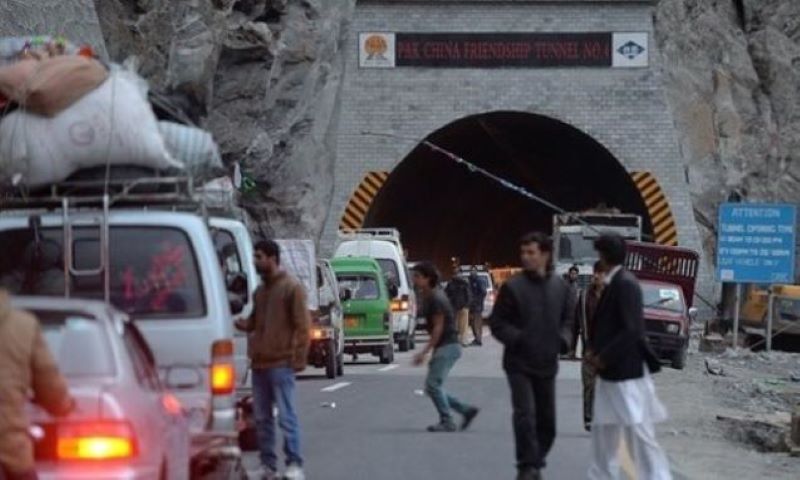
The problem does not stop at Gwadar. The entire province of Balochistan has been neglected. Out of the total 25.4 billion dollars spent on completed CPEC projects, only 3.2 billion dollars went to Balochistan. Even within that amount, 1.9 billion dollars were used for a coal power plant in Hub. This plant supplies electricity to other regions but does not directly help the development needs of Balochistan. The remaining projects include highways and some infrastructure around Gwadar, but none of these investments matched the scale of what was done in other provinces. Most shockingly, CPEC did not bring even a single motorway to Balochistan. This reflects the deep imbalance in project distribution and planning.
Now the question arises, who is responsible for this neglect? The biggest share of responsibility lies with the Pakistan Muslim League-Nawaz (PML-N) government, which led the country from 2013 to 2018. That was the time when all major CPEC planning and agreements were being finalised. The ruling party focused its attention on Punjab, which is their political stronghold. Balochistan, with its smaller population and fewer parliamentary seats, was not seen as politically important. Therefore, it was sidelined in planning and execution. The decisions made during those early years shaped the entire trajectory of CPEC and unfortunately, those decisions did not include Balochistan in any meaningful way.
In the past few years, the government has been trying to revive interest in what it calls CPEC 2.0. This second phase of the project is said to focus on industrial zones, clean energy, agriculture, and social development. One of the biggest proposed projects under this new phase is Main Line 1 or ML-1. This is a plan to upgrade the railway track between Karachi and Peshawar. It is worth 6.8 billion dollars and is supposed to be the largest CPEC project to date. But this project has been under discussion since 2015, and yet, no real work has started. The constant delays make it hard to believe that this phase will be any different from the first one.
Moreover, just like the earlier phase, CPEC 2.0 also seems to bypass Balochistan. So far, there has been no talk of major infrastructure or industrial investments in the province under the new plans. If this pattern continues, the gap between Balochistan and other provinces will only grow wider. The lessons from the past ten years do not seem to have been learned. This is deeply worrying for anyone who believes in equal development and national integration.
What this situation really reveals is a flaw in Pakistan’s federal structure. In a truly federal system, resources and development are distributed in a fair and balanced manner. But in Pakistan, the provinces with larger populations get most of the attention and resources. Provinces like Balochistan, which are already behind, are further left out. Because Balochistan does not offer many political benefits, it is ignored in major policy decisions.
Looking ahead, there are talks of mining projects and other investments being planned for Balochistan. The province is rich in minerals and natural resources. But if these new projects follow the same path as CPEC, they will also fail to uplift the local population. Any future investment must ensure that the people of Balochistan are not just observers, but actual participants and beneficiaries. Local employment, basic infrastructure, and social services must be part of the package. Otherwise, these projects will only deepen resentment and widen existing gaps.
Ten years ago, CPEC was announced with great hope. It was supposed to be a turning point for Pakistan and especially for Balochistan. Instead, it has become a symbol of how promises can be broken and priorities misplaced. While officials and experts argue over success and failure, the people of Balochistan continue to wait for the development they were promised. This anniversary should not just be a moment of celebration. It should be a moment of reflection on what went wrong and how the same mistakes can be avoided in the future.__Courtesy The Friday Times Pakistan