

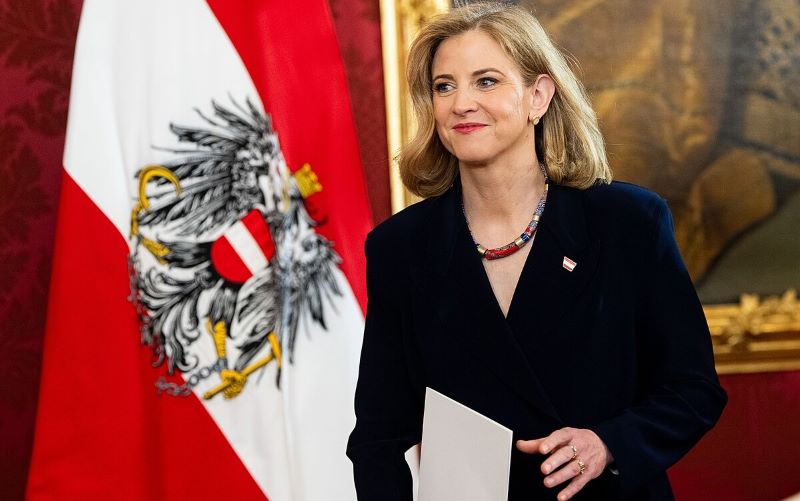
VIENNA: Austria’s NEOS leader Beate Meinl-Reisinger has called on the governing parties to reconsider the country’s new parcel tax, saying it could be dropped if the government finds savings elsewhere.
The €2 tax on qualifying parcel deliveries took effect on 1 October. The Finance Ministry expects it to raise €280 million a year, helping to fund a cut in value-added tax on selected basic foods. The tax generally applies to online retailers whose annual distance sales in Austria exceeded €100 million in the previous financial year.bmf.
Speaking to the Kurier newspaper a day before a NEOS members’ meeting in Linz, Meinl-Reisinger called the tax “a real mess.” She said the government should consider other ways to raise the money, including cuts to small subsidies and a lower cap on the education leave allowance. “Responsibility also means recognising when something has not worked,” she said.
Her comments follow criticism from Economy Minister Wolfgang Hattmannsdorfer of the conservative People’s Party (ÖVP), who said he was “not a fan” of the levy.
The tax has also drawn legal challenges. The Austrian Retail Association has complained to the European Commission, while Zalando has filed a case with the Constitutional Court. Otto plans to challenge tax assessments, according to the report.
Retailers say the charge is changing shopping habits. Rainer Will, head of the Austrian Retail Association, told oe24 that some customers were placing larger orders through online platforms to spread the cost across more products. He said this was also hurting traditional shops.
The Finance Ministry defended the tax, pointing to the sharp rise in parcel deliveries and the resulting environmental pressures. It also argued that online retailers often make a relatively small contribution to Austria’s economy despite relying on the country’s infrastructure.
The tax is intended to help pay for a reduction in VAT on selected basic foods, which saves the average Austrian household about €6 a month, according to Parliament’s Budget Office. Will argued that households could end up paying twice that amount through the new parcel charge.





