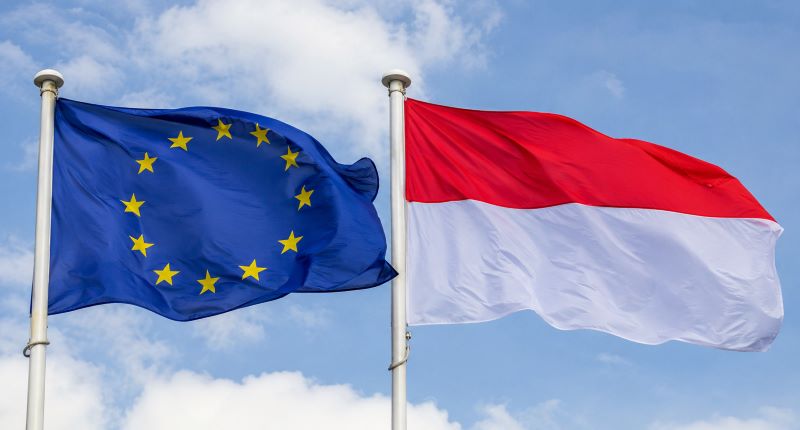
After nearly a decade of negotiations, the European Union and Indonesia, the world’s largest island nation, have signed a sweeping free trade agreement along with a separate investment protection pact, according to News ORF.
The deals aim to gradually eliminate tariffs on nearly all goods traded between the two sides and to make cross-border investment easier. “At a time when others are closing their doors, we are keeping ours open,” European Commission President Ursula von der Leyen said in Brussels over the weekend.
Once fully implemented, the free trade agreement will remove duties on up to 98.5 percent of product categories, according to the EU. European exporters could save an estimated 600 million euros annually in tariffs. Indonesian import duties on European cars, which currently reach as high as 50 percent, are set to disappear within five years.
The EU also hopes the agreement will secure better access to critical raw materials. Indonesia is one of the world’s leading producers of nickel and cobalt, both essential for battery production. The pact is designed to make supply chains more reliable and reduce trade barriers, including through a ban on export monopolies for raw materials and rules against discriminatory pricing.
Von der Leyen described the trade deal as one of the most ambitious the EU has struck in Asia. Indonesia is the largest economy in Southeast Asia, and together the two economies represent well over 700 million people.
With about 290 million residents, the G-20 nation is the world’s third-largest democracy and the most populous Muslim-majority country. Since 1976, the secretariat of the Association of Southeast Asian Nations has been based in its capital, Jakarta. The sprawling archipelago is widely regarded as one of the most important players in the Indo-Pacific.
For both Brussels and Jakarta, the agreement is more than a matter of numbers. It is a statement of intent: that even in an era of closing doors, trade can still build bridges.