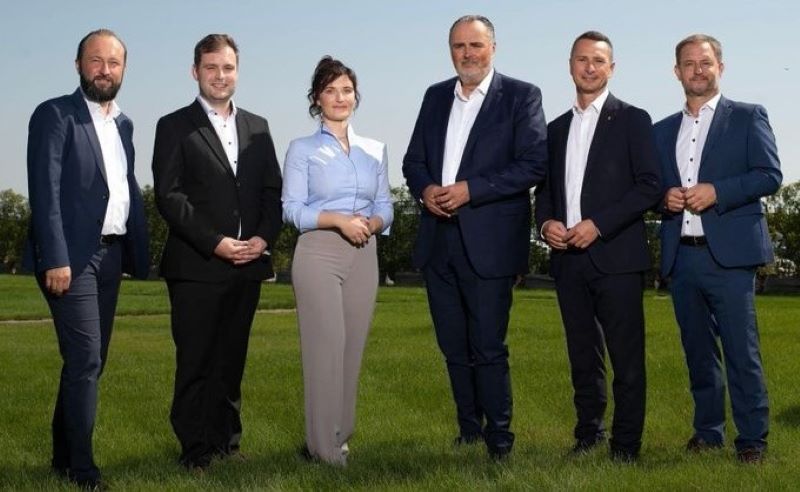
According to party and media reports, the Social Democratic Party (SPÖ) in Burgenland has confirmed its intent to negotiate a coalition agreement with the Greens, signaling a decisive move toward progressive governance in the region. This decision, unanimously approved by the SPÖ’s leadership, reflects a strategic alignment that aims to distinguish Burgenland from the broader national trend of right-wing coalitions. Hans Peter Doskozil, the SPÖ’s leader in Burgenland, announced the decision on Monday, emphasizing the importance of stability and forward-thinking policymaking.
The SPÖ’s choice to engage with the Greens comes after thorough consultations with other parties, including the Freedom Party (FPÖ) and the Austrian People’s Party (ÖVP). Doskozil dismissed the possibility of a partnership with the FPÖ, citing significant ideological differences despite acknowledging the professionalism and amicability of Norbert Hofer, the FPÖ’s lead candidate in the region. Discussions with the ÖVP were reportedly constructive; however, Doskozil expressed concerns that a coalition with the conservatives could regress into outdated political patterns characterized by proportional representation. This, he argued, would fail to meet the electorate’s demand for pragmatic and innovative governance. He also noted that the ÖVP’s internal challenges, including unclear leadership and policy direction, made them an unreliable partner at this time.
The SPÖ views the Greens as a more stable and compatible partner, aligning on key policy priorities and offering a clear path to effective governance. Coalition negotiations are set to begin immediately, with both sides seeking to craft a model of cooperation that contrasts sharply with the likely FPÖ-ÖVP coalition at the federal level. This approach reflects the SPÖ’s ambition to demonstrate a modern, progressive alternative for Austria’s political landscape.
In the recent Burgenland elections on January 19, the SPÖ secured a commanding 46% of the vote, affirming its position as the dominant political force in the region. While coalition possibilities were technically viable with the FPÖ, ÖVP, or Greens, the SPÖ’s decision underscores a calculated preference for stability and shared values. Meanwhile, the liberal Neos party failed to surpass the electoral threshold to gain representation in the state parliament.