

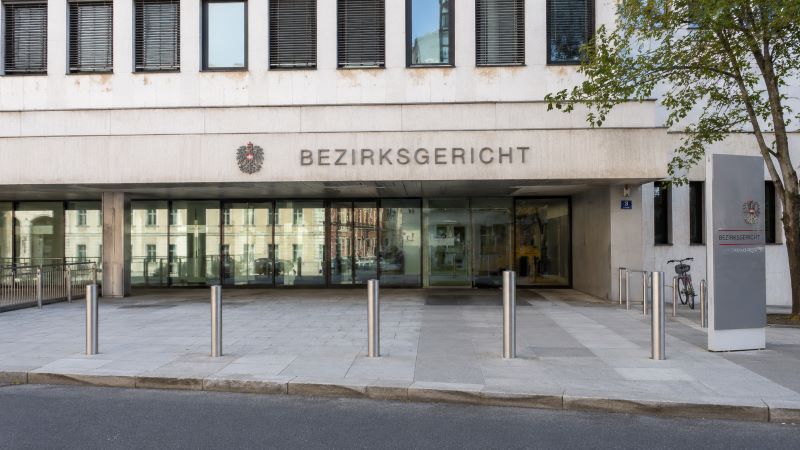
Austria’s Courts Plan Protest Over Staff Shortages
Austria’s judges and prosecutors are planning a nationwide protest in October, warning that chronic staff shortages are placing the country’s justice system under growing pressure.
From October 12 to 16, courts will not hold hearings, issue decisions or schedule official consultation appointments, except in urgent and unavoidable cases. The action is intended to draw attention to the lack of personnel in Austria’s judiciary, according to ORF News.
“The continuing overload of the courts is endangering the ability of the rule of law to function,” Gernot Kanduth, president of the Association of Judges, said in an interview with the Austria Press Agency.
The protest follows months of warnings from judicial representatives, who have been calling for more staff and additional permanent positions. However, no new posts for judges or prosecutors have been included in the government’s 2026–27 budget.
Kanduth said courts had been facing “enormous additional pressure” for the past six or seven years. The problem is particularly serious at district and regional courts, where 1,478 judges are currently employed.
More than 1,700 judges are needed at those courts, Kanduth argued. Even that figure, he added, comes from the Justice Ministry’s staffing calculation, which is already based on cautious estimates.
The average workload has now reached about 120 percent. In practical terms, Kanduth said, this means either working a six-day week or completing twelve months’ worth of work in only ten months.
The timing of the protest was chosen for that reason. By mid October, the judiciary will have mathematically completed the workload planned for the entire year, leaving officials to carry out further work without sufficient staff.
The action is not intended to deny legal protection to the public. Urgent cases, including matters involving detention, legal deadlines or emergency orders, will continue to be handled.
But the message from the judiciary is unmistakable: without additional personnel, Austria’s courts may no longer be able to maintain their usual standard of work. For those seeking justice, the growing backlog is more than an administrative problem, it is a warning that the foundations of the legal system are being stretched to their limit.





