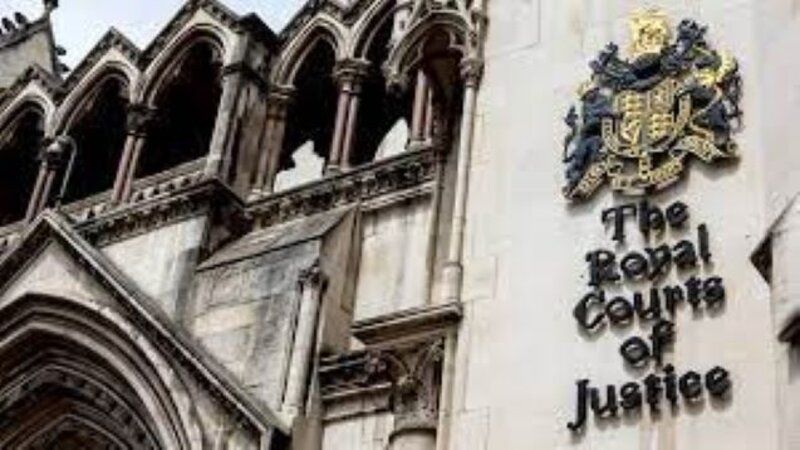
LONDON — The United Kingdom’s High Court has ruled that the government can continue exporting parts for F-35 fighter jets to Israel, despite acknowledging the possibility that the components could be used in violations of international humanitarian law in Gaza, reported by The Frontier Post.
In a 72-page ruling issued Monday, Judges Stephen Males and Karen Steyn emphasized the limitations of judicial authority in matters of foreign policy and defense. “That acutely sensitive and political issue is a matter for the executive, which is democratically accountable to Parliament and ultimately to the electorate, not for the courts,” the judgment stated.
The case was brought by Al-Haq, a Palestinian human rights organization based in the occupied West Bank, which argued that the UK government’s ongoing exports of F-35 parts indirectly supported alleged war crimes in Gaza. Although the UK suspended about 30 arms export licenses to Israel in September 2023, parts for the F-35 remained exempt — prompting legal action against the Department for Business and Trade.
The UK is part of a multinational program that produces the American-designed Lockheed Martin F-35 jets. Britain contributes around 15% of each aircraft, supplying components such as refueling probes, laser targeting systems, tyres, and ejector seats — not specifically for Israel, but to a global pool. Al-Haq contended that this contribution still constituted complicity in international law violations, citing the continued Israeli bombardment of Gaza, which has killed more than 56,500 Palestinians and injured over 133,000 since October 2023.
Defence Secretary John Healey argued in May that halting exports would jeopardize NATO supply chains and undermine allied defense efforts, including Ukraine’s resistance to Russia’s invasion. The court ultimately sided with the government, recognizing the strategic value of continued exports even as it acknowledged potential legal risks.
Al-Haq’s director, Shawan Jabarin, called the ruling a beginning rather than a defeat. “Despite today’s outcome, this case has centered the voice of the Palestinian people and rallied public support,” he said. “We will continue to persevere in the UK and beyond until governments are held accountable, Israel’s impunity is challenged, and justice for the Palestinian people is realized.”
Advocacy groups like Oxfam International, which joined the case, criticized the UK’s selective licensing policy. A May report by pro-Palestine organizations claimed British military exports to Israel have continued despite the official suspension.
As legal challenges and public scrutiny mount, the UK’s role in the global arms trade faces renewed moral and political reckoning.