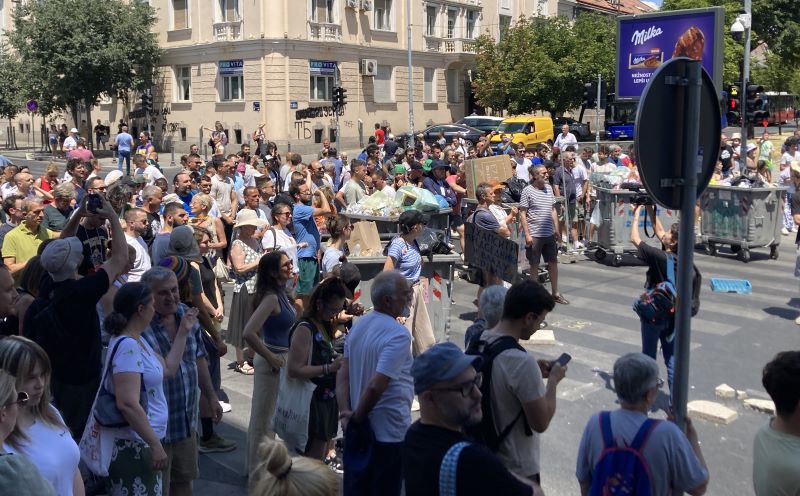
BELGRADE — Serbian police dismantled street barricades in Belgrade on Monday following a weekend of mass anti-government protests that erupted into violent clashes, reported by Al Jazeera News. Authorities confirmed multiple arrests, though they withheld the total number.
The blockades—rubbish containers and metal fences—had paralyzed traffic in Belgrade’s Zemun district as protesters voiced deepening frustration with President Aleksandar Vučić’s right-wing government. Dozens remained on-site as police moved in, vowing to return despite the crackdown.
The protests, which have gained momentum over the past eight months, intensified after a roof collapse at the Novi Sad train station last November killed 16 people. The incident, blamed widely on corruption and shoddy construction, became a symbol of systemic dysfunction.
Saturday’s protest in Belgrade marked one of the largest yet, with organizers claiming over 140,000 participants. Authorities contested the figure, estimating 36,000. What began as a peaceful demonstration escalated as protesters clashed with riot police, who responded with batons and pepper spray. Nearly 50 officers and 22 demonstrators were injured. At least 40 people now face criminal charges, and eight university students have been detained on suspicion of plotting attacks against state institutions.
President Vučić, speaking from Spain, praised police for restoring order. “The state is strong enough to secure law and order,” he declared, vowing further action. He also blamed “foreign powers” for orchestrating the unrest, accusing them of attempting to “topple Serbia”—a charge critics view as an effort to deflect from domestic turmoil.
Neighboring Russia echoed Vučić’s stance, warning the protests might be a “color revolution,” invoking past uprisings in post-Soviet states. The Kremlin expressed confidence in Vučić’s ability to maintain control.
Despite the outcry and the resignation of Serbia’s prime minister last year, Vučić has resisted demands for early elections, keeping the next vote scheduled for 2027. But as protests swell and arrests mount, pressure on his government—and the streets—continues to rise.