WASHINGTON: In a moment that drew thunderous applause, US President Donald Trump told supporters at the Republican Party’s first-ever mid-term convention that he would hand every adult American a $5,000 payout but only if his party retains control of both chambers of Congress in November.
Speaking in Dallas, Texas, Trump offered few specifics on how the plan, which he called a “Trump Dividend,” would be funded or enforced. He insisted only that recipients would need to spend the money within the United States, according to BBC News. “We don’t want you going to Canada to spend the money,” he told the crowd, later adding that trips to China or Germany wouldn’t count either.
With nearly 270 million adults in the country, the pledge would cost the federal government roughly $1.3 trillion, a staggering figure that has already invited scrutiny from economists, lawmakers, and legal experts alike.
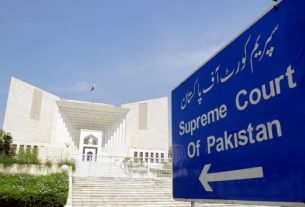
Vice-President JD Vance tied the proposal to revenue generated through Trump’s sweeping tariff policies, describing it as “a dividend for American workers” rather than a handout. Still, sceptics point out that a similar $2,000 tariff-funded payment Trump floated earlier never came to pass, and the Supreme Court has since ruled most of his tariffs unlawful.
The announcement comes against the backdrop of rising prices in the US, driven partly by an ongoing conflict involving the US, Israel, and Iran that has disrupted oil flows through the Strait of Hormuz. Trump has acknowledged that economic pressures may persist until after the midterms, framing the hardship as a necessary cost of preventing Iran from acquiring nuclear weapons.
Legal analysts remain divided over whether the payout plan could run afoul of federal laws barring payments meant to influence votes. Some, like New Mexico attorney John Day, argue the promise is lawful since it applies broadly to all citizens rather than targeting specific voters. Others point to First Amendment protections that may shield such campaign pledges altogether.
Democrats have dismissed the idea as an “empty promise,” while political observers note that incumbent parties historically lose ground in midterm elections; making Trump’s dramatic pledge as much a political gamble as an economic one.
As the November 3 elections approach, the proposal is likely to remain a flashpoint in the national conversation, with voters left to decide whether the promise of a windfall will translate into ballots cast for the Republican Party.