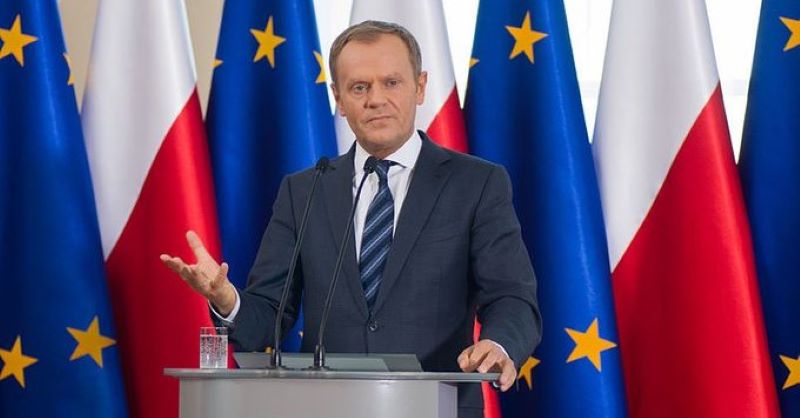
A fresh wave of concern has spread across Europe after Poland’s Prime Minister, Donald Tusk, accused Hungary of potentially sharing sensitive Western information with Moscow, according to Euro News. His remarks have added tension to already strained relations within both the European Union and NATO.
Tusk revealed that as early as 2019, Lithuania had asked for Hungary to be excluded from a NATO meeting. The reason, he said, was a growing fear that confidential information discussed among allies might be passed on to Russia. According to Tusk, such concerns were not isolated, but had been voiced repeatedly over the years by multiple countries.
The issue resurfaced following a report by The Washington Post, which claimed that Hungary’s Foreign Minister, Péter Szijjártó, had shared information with Russia’s Foreign Minister Sergey Lavrov during breaks in European Union meetings. While Szijjártó initially dismissed the claims as false, he later admitted to regularly speaking with officials from countries outside the EU, including Russia, the United States, Turkey, and Israel. He described these conversations as “natural.”
Tusk, however, strongly criticized this behavior. Writing on social media, he called it a “disgrace” if Hungary had indeed informed Moscow about private discussions among EU leaders. He also said the situation did not surprise him, as he had long suspected such actions.
Further adding to the debate, former Lithuanian Foreign Minister Gabrielius Landsbergis confirmed that during preparations for the 2023 NATO summit in Vilnius, efforts were made to limit Hungary’s participation in meetings involving sensitive topics.
Still, not everyone agrees. A former Lithuanian ambassador to NATO said he does not recall any official request to exclude Hungary in 2019, casting some doubt on Tusk’s claim.
Hungary has not directly addressed the accusations. Instead, Prime Minister Viktor Orbán has reportedly launched an investigation, suggesting that his foreign minister may have been secretly monitored.
As questions remain unanswered, the controversy highlights growing mistrust within Western alliances at a time of global uncertainty.