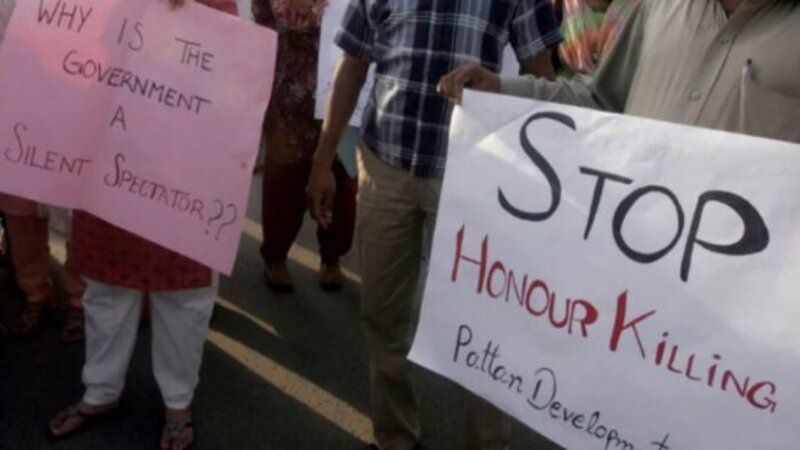
A harrowing video showing the cold-blooded execution of a woman and man in Pakistan’s Balochistan province has reignited a national reckoning over so-called honor killings, a practice outlawed but still quietly tolerated in many parts of the country. The Human Rights Commission of Pakistan (HRCP) reports at least 405 such killings so far in 2024, most targeting women, often by relatives claiming to defend family honor.
The viral video, which emerged recently but depicts an incident that occurred months ago near Nasirabad, shows a woman, Bano Bibi, being handed a copy of the Quran by her brother before she is shot dead. Seconds later, her alleged partner, Ehsanullah Samalani, is also killed. The man behind the trigger, Jalal Satakzai, remains at large, though authorities have arrested 16 others, including Bano’s mother and a local tribal chief.
While the footage has sparked outrage across Pakistan and led to widespread condemnation from politicians, clerics, and rights groups, critics say the state’s delayed response reflects a deeper failure. “This isn’t a response to a crime,” said civil rights lawyer Jibran Nasir. “It’s a response to a viral moment.”
Balochistan’s Chief Minister Sarfraz Bugti has called it a “test case,” vowing to crack down on illegal tribal courts—known as jirgas—which continue to wield extrajudicial power in many rural areas. Yet the state’s track record remains bleak. Despite a 2016 law banning honor killings and closing legal loopholes, enforcement is lax and conviction rates are low.
The killings have spurred protests in Quetta and online calls for justice under hashtags like #JusticeForCouple. Religious scholars from the Pakistan Ulema Council denounced the act as “un-Islamic,” urging terrorism charges against the perpetrators.
But for many, including human rights lawyer Jalila Haider, the uproar may fade as it has before. “There’s noise now, but like every time, it will fade,” she warned. “The real question is: why does the state allow jirgas to exist in the first place?”
As the country reacts to this latest atrocity, many fear that in a nation where justice often follows spectacle, the victims may be remembered more for how they died than what they stood for.