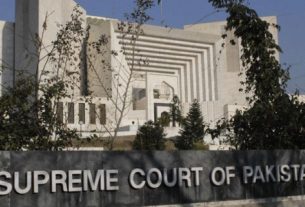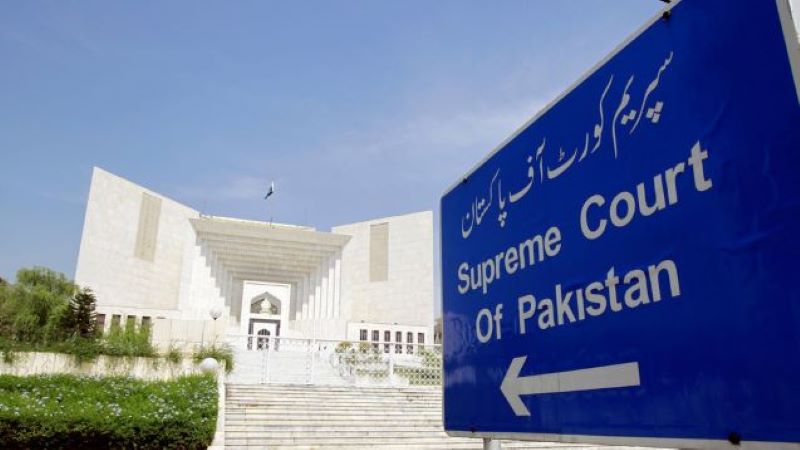
Pakistan’s political drama reached fever pitch on Friday as opposition party leaders staged an all-day sit-in outside the Supreme Court, demanding transparency about imprisoned former Prime Minister Imran Khan’s mysterious medical treatment, according to Dawn News.
The Pakistan Tehreek-e-Insaf (PTI) party, led by Secretary General Salman Akram Raja, finally secured a partial victory after hours of tense negotiations. Speaking to gathered media as evening shadows fell across Islamabad, Raja announced that Khan’s family would receive copies of his medical reports in a sealed envelope, a small concession after a day of relentless pressure.
“There is nothing more important for us than Imran Khan sahib’s health,” Raja declared, his voice heavy with frustration. Standing beside him were Khyber Pakhtunkhwa Chief Minister Sohail Afridi and Senate opposition leader Allama Raja Nasir Abbas, their presence underscoring the gravity of the situation.
The controversy erupted after Information Minister Attaullah Tarar confirmed that Khan underwent a medical procedure for an eye ailment at Pakistan Institute of Medical Sciences (PIMS) in Islamabad on January 24. The government claimed it was a routine “20-minute” procedure. However, PTI leaders paint a far more alarming picture.
The secrecy surrounding the procedure ignited suspicions. Khan’s family learned about the hospital visit only after it happened, and for five days, authorities reportedly denied anything had occurred at all. “And then lies are told,” Raja said bitterly. “For five days, they say that no such incident has happened.”
PTI lawyer Sardar Latif Khosa contradicted the government’s timeline entirely, claiming the procedure actually lasted two and a half hours, not twenty minutes as officially stated. He suggested Khan suffered a retina rupture, a serious condition requiring extensive treatment.
The opposition’s desperation manifested in unprecedented demonstrations. Before descending on the Supreme Court, party workers had camped outside Adiala jail, where Khan remains imprisoned, through Thursday night until 3 a.m. Friday. Chief Minister Afridi then led the contingent to the Supreme Court building, briefly departing only for Friday prayers before returning to maintain the vigil.
Throughout the day, PTI leaders met with the Supreme Court registrar, Attorney General of Pakistan, and the Chief Justice’s staff, pleading their case. They demanded that Khan’s personal physicians from Shaukat Khanum Hospital be granted access to examine him independently.
“Secrecy is cancer to democracy,” PTI Chairman Barrister Gohar Khan told reporters at Khyber Pakhtunkhwa House, capturing the party’s core argument. “His family is worried due to his health.”
The opposition views Khan’s treatment as symptomatic of broader injustices. Senate opposition leader Abbas framed it in constitutional terms; “Every person has fundamental rights under the Constitution. Creating hindrances in the path to fundamental rights is oppression.”
Raja emphasized that while receiving medical reports represents progress, it falls short of what justice demands. “We do not accept this current situation,” he insisted. The party’s political committee plans to meet soon to chart their next moves, consulting with both Senate and National Assembly opposition leaders.
Afridi struck at the heart of PTI’s frustration: “Imran Khan and Bushra Bibi’s cases have not been listed for one year. If the cases are listed today and we are provided justice, Khan sahib and Bushra Bibi, along with other leaders, will be released from prison within half an hour.”
For now, Pakistan’s most popular opposition leader remains behind bars, his health condition shrouded in official secrecy, while his supporters maintain their vigil outside the nation’s highest court—hoping transparency might finally pierce through the walls of silence.