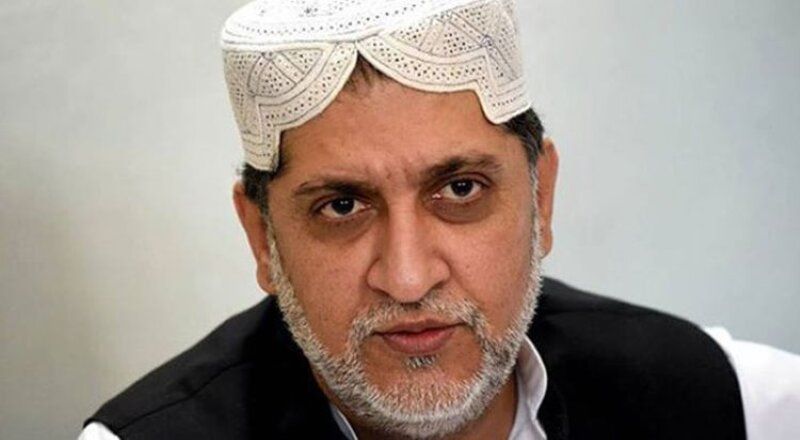
QUETTA — In a scathing denunciation of state repression and systemic human rights violations, Balochistan National Party-Mengal (BNP-M) President Sardar Akhtar Mengal has launched what he termed a “politics of national resistance,” vowing to challenge institutional apathy and authoritarianism that have, he argued, rendered parliamentary and judicial avenues impotent in safeguarding fundamental rights.
Speaking to a charged gathering at Shahwani Stadium on Friday night, Mengal declared that the BNP-M would no longer seek the state’s approval for political expression. “When the government demands silence, we respond by asking it to abandon the very policies that compel the people to take to the streets,” he said.
Mengal’s impassioned address was laced with accusations of gross misconduct by security forces and the judiciary. He condemned what he described as the “dishonouring” of Baloch women, the widespread practice of enforced disappearances, and the routine recovery of mutilated bodies across the province. “How can we remain silent when our youths are abducted, tortured, and dumped like carcasses?” he demanded. He warned that if these abuses persist, his party would not hesitate to protest outside military cantonments.
The BNP-M leader also rebuked the judiciary for failing to uphold its constitutional duties, accusing it of acting under the influence of military intelligence rather than the law. “Female political activists are illegally detained under the guise of the Maintenance of Public Order Ordinance, while courts offer dates instead of justice,” Mengal said.
The event was marked by solidarity with detained activists, including Dr. Mahrang Baloch, whose sister, Iqra Baloch, passionately addressed the crowd. Human rights activist Nasrullah Baloch of the Voice for Baloch Missing Persons echoed Mengal’s claims, asserting that extrajudicial killings, forced disappearances, and fake police encounters have become chillingly routine in Balochistan.
Several resolutions were passed, demanding the immediate release of political workers such as Dr. Mahrang Baloch, Bebo Baloch, Gulzadi Baloch, and Bebarg Baloch. The gathering spotlighted the ever-tightening stranglehold on free assembly, press freedom, and democratic dissent in Pakistan, particularly in its restive southwestern province.
As voices of resistance grow louder, the state’s silence — and its apparent complicity — continues to deepen Pakistan’s human rights crisis.