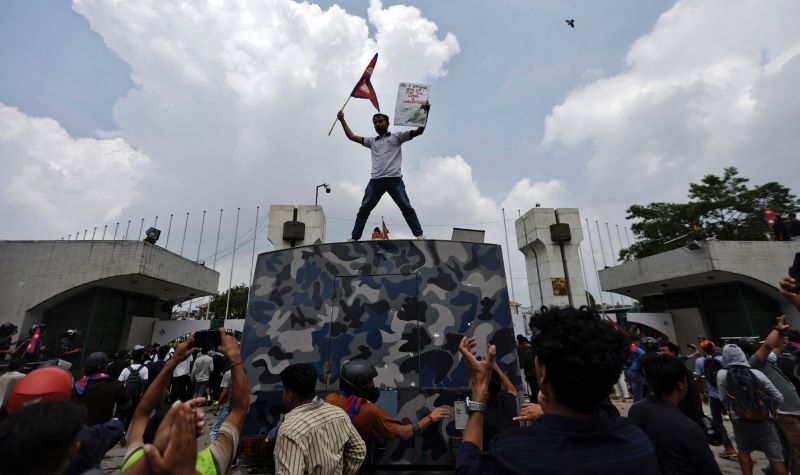
Kathmandu — Nepal’s army is engaging in talks with protesters to select an interim leader following violent demonstrations that toppled Prime Minister KP Sharma Oli, officials said Thursday, as the nation struggles to regain stability.
Soldiers patrolled the capital’s streets for a second day after the country witnessed its most intense protests in decades, sparked by a now-lifted social media ban. Shops, schools, and colleges remained closed, though essential services resumed under eased military restrictions. A nationwide curfew, first imposed Tuesday night, will continue through Friday, allowing only critical workers and travelers with tickets to move freely.
President Ramchandra Paudel appealed for calm, saying he was consulting widely to resolve the crisis within Nepal’s constitutional framework. “I appeal to all parties to be confident that a solution is being sought as soon as possible to address the demands of the protesting citizens,” he said, urging restraint and cooperation to maintain peace.
Army spokesperson Raja Ram Basnet told Reuters that “initial talks are on and would continue today,” signaling efforts to normalize the situation and facilitate the formation of an interim government.
Former Chief Justice Sushila Karki, Nepal’s first woman to hold the post in 2016, has emerged as a frontrunner for the interim leadership. Protesters describe her as “honest, fearless, and unshaken,” though divisions remain within the groups, and no consensus has yet been reached. Kathmandu Mayor Balen Shah and several other local figures have voiced support for Karki, but differences among both protesters and mainstream parties leave the political path uncertain.
Al Jazeera correspondent Rob McBride described Kathmandu as tense, with frequent standoffs outside military headquarters as protesters gather and are pushed back. He noted that many young demonstrators, key participants in the so-called “Gen Z” protests, are observing developments cautiously.
The protests, triggered by frustration over corruption and lack of economic opportunity, turned deadly, claiming at least 31 lives, including one woman. Government buildings, ministers’ homes, and Oli’s private residence were set ablaze, alongside hotels in Pokhara and the Hilton in Kathmandu.
As the nation watches the military-mediated talks unfold, uncertainty lingers over whether a unified interim government can be formed. The hope, McBride said, is for a political solution that addresses protesters’ demands while restoring order.
Nepal now faces the delicate task of balancing constitutional governance, popular unrest, and public safety as it seeks to navigate a volatile transition.