In the shadow of a suburban Home Depot in Paramount, California, fear spread like wildfire. Rumors whispered of a sweeping immigration raid—day laborers arrested, lives upended, reported by BBC News. By Sunday morning, the parking lot, once a hub for undocumented workers offering roofing and painting services, stood eerily quiet.
Where dozens of laborers usually gathered, only a couple of battered pickups waited, their hand-painted signs flapping in the breeze. Juan, a local worker, leaned on the bed of a truck, scanning the mostly empty lot. “No one really knows what happened,” he murmured. “Everyone is afraid.”
The fear had taken root a day earlier when reports—later confirmed false—claimed that Immigration and Customs Enforcement (ICE) had raided the store and detained undocumented immigrants. The panic was swift and palpable, fanned by sightings of federal vehicles in the area. Within hours, protests erupted.
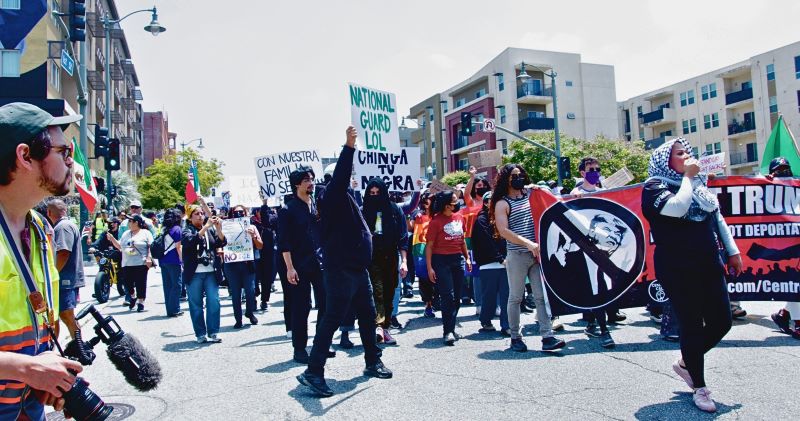
Paramount, a majority-Hispanic city just south of Los Angeles, boiled over. Rocks and Molotov cocktails were hurled. Businesses were looted. A car was set ablaze. Riot police deployed tear gas, pepper spray, and rubber bullets. By Sunday, the California National Guard had been summoned—not by the governor, but directly by President Donald Trump.
Across the street from the hardware store, National Guard troops stood behind Humvees, defending a gated office park identified by federal officials as a DHS staging area. Protesters waved Mexican flags and shouted insults. One man scrawled obscenities against ICE on the sidewalk.
The Department of Homeland Security later confirmed to the BBC: there had been no raid at Home Depot. The chaos, it seems, was born of misinformation.
Still, federal agents acknowledged detaining 118 undocumented immigrants across Los Angeles that week, including five alleged gang members with prior criminal records.
For locals like Dora Sanchez, the protests marked a breaking point. At the nearby Chapel of Change church, she and others mourned what their community had endured. “It didn’t feel real,” she said.
Maria Gutierrez, another protester, called it a moment of reckoning. “This is LA,” she said. “Everyone knows someone without papers. It touches all of us.”
In a city that prides itself as a sanctuary, the rumors of a raid—true or not—ignited more than protest. They exposed a community on edge, ready to rise.