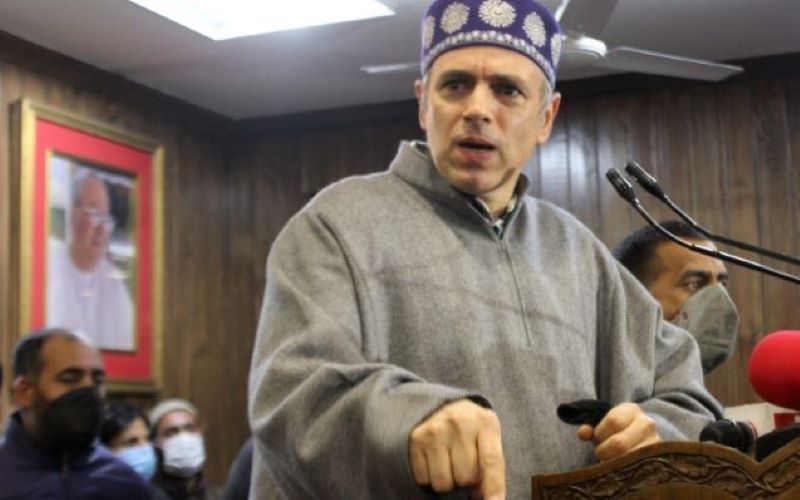
Jammu, Jan 9: Jammu and Kashmir Chief Minister Omar Abdullah highlighted the need for the Aam Aadmi Party (AAP), Congress, and other political parties to devise a strong strategy to counter the BJP in the upcoming Delhi Assembly elections. Speaking to reporters in Jammu, he remarked, “The AAP, Congress, and the parties active in Delhi should decide on the best way to challenge the BJP in these polls. As of now, we have no direct role in these elections.”
Acknowledging AAP’s previous victories, Omar Abdullah noted, “AAP has won the last two Delhi assembly elections decisively. This time, it’s for the people of Delhi to make their choice again.”
The remarks come at a time when opposition parties are grappling with unity under the INDIA alliance, especially in light of growing demands for the restoration of Jammu and Kashmir’s statehood and the backlash following the abrogation of Article 370 in August 2019. While the INDIA alliance seeks to present a united front against the BJP, tensions between its key constituents, particularly the Congress and AAP, have surfaced, challenging this solidarity.
Farooq Abdullah’s Stand on Alliance
Former Chief Minister and National Conference patriarch Farooq Abdullah added nuance to the discourse, stressing that the INDIA alliance’s scope extends beyond elections. He remarked, “The alliance is not just about contesting elections. It exists to strengthen the country, restore harmony, and remove the hatred that has spread. Those who believe it’s solely for parliamentary polls are mistaken.”
Farooq Abdullah’s comments reflect concerns about the divisive political atmosphere post-2019, particularly in Jammu and Kashmir, where residents continue to demand the restoration of statehood and constitutional guarantees that were stripped during the abrogation of Article 370.
Delhi Assembly Polls Overview
The Delhi Assembly elections are slated for February 5, with vote counting scheduled for February 8. Key dates include the last day for filing nominations on January 17, scrutiny on January 18, and withdrawal of candidatures by January 20.
In the previous 2020 elections, the AAP achieved a landslide victory, winning 62 out of 70 seats, while the BJP managed only eight. The Congress, once a dominant force in Delhi politics with 15 consecutive years in power, has failed to secure a single seat in the last two elections, raising questions about its relevance in the capital.
Kashmir Context
The focus on Delhi polls coincides with rising frustrations in Jammu and Kashmir, where the abrogation of Article 370 and the region’s bifurcation into Union Territories continue to fuel protests and political demands for statehood restoration. Political leaders, including Omar Abdullah, have consistently underscored the need for meaningful dialogue and action to address these grievances.
The Abdullahs’ statements reflect a broader concern about opposition unity across the country, particularly in regions like Kashmir, where the BJP’s policies have reshaped the socio-political landscape. With both local and national elections on the horizon, the INDIA alliance faces a dual challenge—mounting an effective opposition in Delhi and addressing simmering discontent in regions like Jammu and Kashmir.
As Delhi prepares for a crucial electoral battle, the interplay between local aspirations and national alliances will likely shape the political narrative for 2024 and beyond. Whether the Congress and AAP can reconcile their differences to challenge the BJP’s dominance in Delhi remains a pivotal question. Meanwhile, the demand for statehood and the restoration of rights in Jammu and Kashmir continues to echo as a critical issue for national leadership to address.