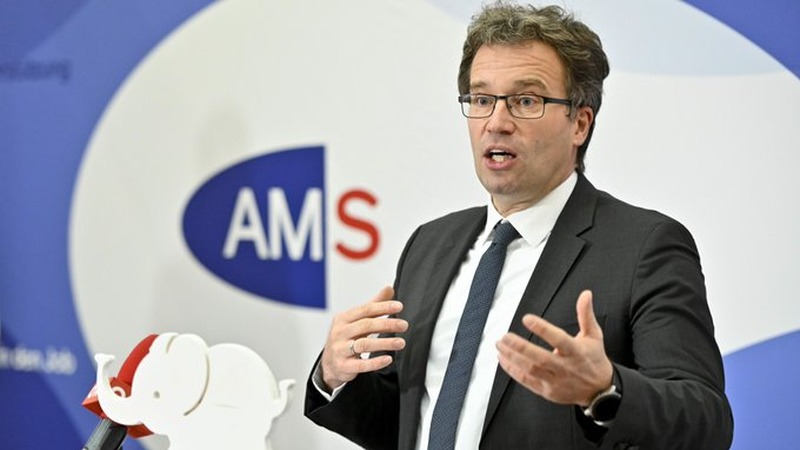
Austria’s planned overhaul of its social assistance system will save money in the long run, even if it costs more at first, says Johannes Kopf, head of the national employment agency AMS.
Speaking on Ö1’s “Morgenjournal,” Kopf said he believes the reform will eventually ease the financial burden on the provinces, but admitted that the switch will bring extra costs, especially for administration and computer programming, reported by Austrian Press Agency. He compared it to insulating a house: you pay up front for the work, then spend less on heating for years afterward.
Kopf also dismissed the idea of a “pause button,” a call made recently by Vienna’s social affairs councillor, Peter Hacker of the Social Democrats. Still, he agreed that questions must be clarified with the Integration Fund and the provinces. Some things will get more complicated, such as oversight duties and the calculation of supplements. Kopf said that is a price worth paying if payments are tied to clear goals like language skills and finding work, but it will take preparation time and well-written laws.
The plan would grant the full benefit only to people who attend language courses and show they are trying to enter the job market. Kopf said most people want to work, though perhaps not always on the terms the market offers. Those who are willing, he said, deserve faster and better support, while others must be motivated. A state that gives so much, he argued, can also ask for something in return. He admitted that the old system sometimes created “inactivity traps” and paid some people too much for too long.
The reform has met strong resistance. Aid organizations warn that it could deepen poverty, and Caritas called it a “breach of taboo.” The provinces, fearing higher costs, have been sharply critical. Upper Austria and Vienna even floated triggering the so-called consultation mechanism. Hacker hoped the federal government would stop and discuss every open question, but the government rejected that the next day.
Officials from the federal and provincial governments will meet again at the Social Affairs Ministry on Thursday and Friday, though details remain unclear.
Meanwhile, the free market think tank Agenda Austria sees weak spots in the draft. It says the provinces still have enormous leeway, with benefits for a family with five children differing by up to 640 euros a month depending on where they live. In Vienna, it adds, a family with eleven children would see its net income fall only from about 9,000 to 8,000 euros, because rent subsidies would rise.