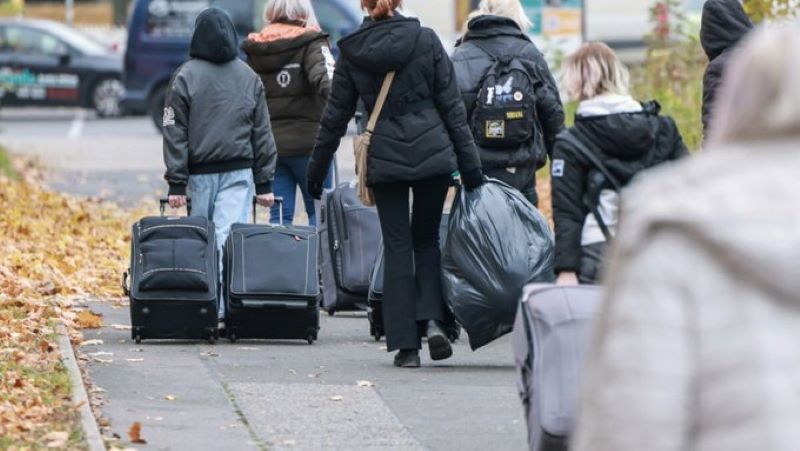
According to German media news: Germany has imposed a temporary halt on its intake of refugees under the United Nations Resettlement Program due to ongoing coalition negotiations among the CDU, CSU, and SPD. The suspension applies to new arrivals, though individuals whose procedures are already advanced will still be admitted. This move aligns with preliminary coalition agreements to curtail voluntary national humanitarian programs and avoid initiating new ones.
The affected program, coordinated by the UN Refugee Agency (UNHCR) and co-financed by the European Commission, targets particularly vulnerable individuals, including widowed mothers, unaccompanied minors, torture survivors, and people with disabilities—groups that typically lack the means for irregular migration.
Germany had initially committed to hosting 13,100 refugees through the program in 2024 and 2025, but only 5,061 have been admitted thus far, including Syrian refugees under the EU-Turkey deal of 2016. Refugees entering via this route bypass traditional asylum applications and receive a three-year residence permit, with the possibility of permanent residency upon successful integration.
In addition to the UN program, Germany runs separate humanitarian admissions, notably accommodating up to 12,000 at-risk individuals from Afghanistan annually. Despite the current freeze, the UNHCR remains optimistic about Germany’s continued involvement, citing its reliable participation under both Angela Merkel and Olaf Scholz.
As the third-largest UN refugee host after the U.S. and Canada, Germany’s pause is seen as a temporary recalibration rather than a permanent retreat from international humanitarian obligations. Analysts expect the country to maintain its broader commitments once a new government is formed.