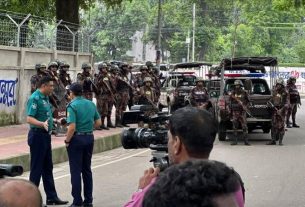
ISLAMABAD – Pakistan’s opposition alliance on Wednesday called off its days-long sit-in outside Parliament House but intensified accusations that authorities are delaying proper medical care for jailed former prime minister Imran Khan, whose health has become a growing national and international concern, according to Dawn News.
Leaders of the Tehreek-i-Tahafuz-i-Ayin-i-Pakistan (TTAP) announced the end of the protest after a Supreme Court hearing in Islamabad, saying there had been slight improvement in Khan’s eyesight. Yet they warned that the core issue remained unresolved: the government’s refusal to allow Khan’s longtime personal physicians and close relatives regular access to him in Adiala Jail.
“We are relieved there is a small improvement,” Senate opposition leader Allama Raja Nasir Abbas told reporters, standing alongside senior opposition figures including Mehmood Khan Achakzai, PTI chairman Gohar Ali Khan, and secretary general Salman Akram Raja. “But his family and his trusted doctors are still being kept away. This cannot continue.”
The opposition has framed the dispute as a matter of human rights rather than politics, accusing authorities of negligence and “delaying tactics” after earlier reports suggested Khan had suffered severe vision loss in one eye and did not receive timely treatment. Abbas said the alliance may pursue legal action over what he called “criminal delay” in providing medical care.
Khan’s family and party insist that independent examination by his personal physicians Dr Aasim Yusuf and Dr Faisal Sultan is essential to verify his condition. They have also requested his transfer to Islamabad’s Shifa International Hospital, arguing that its doctors are independent of government influence. Authorities have so far relied on prison-arranged medical boards, whose recent report indicating partial recovery was rejected by Khan’s relatives and the TTAP.
The opposition ended its sit in partly because of the approaching holy month of Ramadan, but warned that protests could resume in new forms if access is not granted. Abbas said concern for Khan’s health “united people across Pakistan, including critics,” adding that the alliance’s aim was to prevent further harm.
The health controversy unfolded alongside tense courtroom developments. The Supreme Court again refused a request by PTI leader Latif Khosa to meet Khan in jail, saying it lacked authority to order such access in criminal matters. Several legal cases involving the former premier, including election eligibility and defamation proceedings, were adjourned without resolution.
Outside the court, Khyber Pakhtunkhwa Chief Minister Sohail Afridi announced the creation of a “Free Imran Khan Force,” a planned nationwide but peaceful movement to campaign for Khan’s release. Membership drives among youth and party wings are expected to begin after Eid.
For supporters, the issue has come to symbolize broader grievances over Khan’s imprisonment and treatment since his ouster from power. The opposition alliance said repeated restrictions on family visits and independent medical checks have deepened mistrust and fueled suspicions of official stonewalling.
“The matter of Imran Khan’s health is not political,” the TTAP said in a statement. “It is a basic human and constitutional responsibility.” As protests pause and legal battles continue, the dispute over medical access now stands at the center of Pakistan’s most charged political confrontation.