

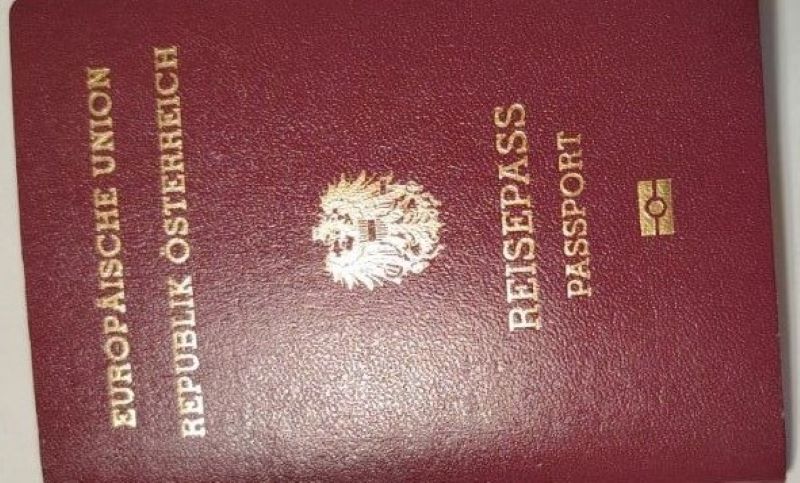
A newborn’s first cry may soon carry more than hope in Upper Austria, at least if the Greens have their way. The party wants to anchor the “place of birth” principle in the state parliament, so that a child would become an Austrian citizen the moment it enters the world. The idea has set off a fierce political quarrel.
Under the Greens’ motion, children would receive citizenship automatically at birth, provided their parents have lived legally in the country for several years. No separate application would be needed. The proposal, known as ius soli, is due to be discussed on Thursday in the state parliament’s constitutional committee.
The debate comes at a time when Austria is often described as one of the strictest countries in the European Union on naturalisation. According to an analysis by the European Parliament, it imposes some of the longest legal waiting periods in the entire bloc.
New momentum came from an unexpected place. On the national holiday, President Alexander Van der Bellen spoke with an eleven-year-old girl and signalled that he was open to the idea, pointing to the model used in the United States. “I would support that too,” he said, before adding a sober reminder: the law, for now, is different.
His warmth was not shared across the political aisle. The conservative ÖVP insists that integration must come first. “The place of birth alone cannot be a free ticket to citizenship,” said Florian Hiegelsberger, the party’s state secretary, who summed up the stance in a short phrase: first integration, then citizenship. Margit Angerlehner, the party’s parliamentary leader, called citizenship “more than a piece of paper,” arguing that applicants must speak the language, respect the law and support themselves.
The right-wing FPÖ went further still. Its parliamentary leader, Thomas Dim, described the motion as a “frontal attack” on the value of Austrian citizenship. In his view, being Austrian is not a matter of where one is born, but of living the culture, speaking the language and carrying the country in one’s heart.
The FPÖ is not only resisting change but also pushing in the opposite direction. Its demands include ending the legal right to naturalisation in favour of a discretionary decision, extending waiting periods to at least 15 years, and introducing a probationary citizenship that could be revoked after serious crimes.
Between a cradle and a passport, Upper Austria now finds itself arguing over what it truly means to belong.





