

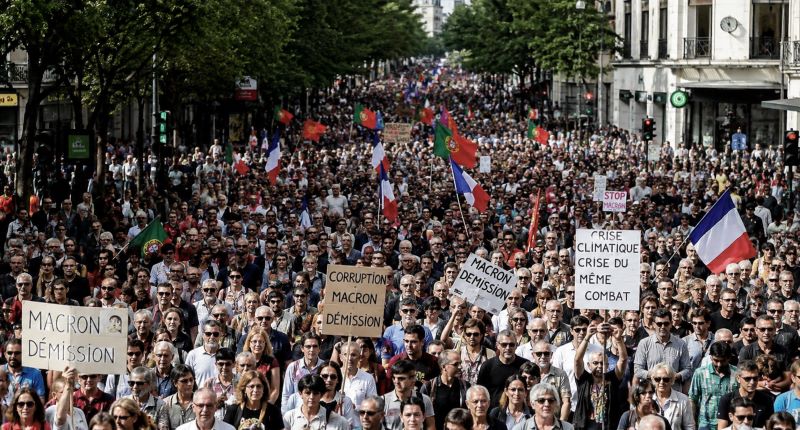
Thousands of people took to the streets across Portugal, France and Spain on Saturday, November 21, voicing growing anger over rising living costs, unaffordable housing, low wages and social inequality, according to Euro News. From rain soaked streets in Lisbon to crowded avenues in Paris and Barcelona, demonstrators demanded economic relief, better public services and a fairer future.
In France, protests entered their sixth consecutive Saturday, drawing trade union members, young people and Yellow Vest activists. Marchers carrying banners and union flags travelled from Place de la République to Place de la Nation in Paris. According to the Interior Ministry, 82,500 people demonstrated nationwide, including 21,500 in the capital. Organisers, however, estimated the turnout at 150,000.
Although most demonstrations remained peaceful, police used tear gas to disperse unauthorised marches in Lyon. Sporadic clashes were also reported in Marseille. Around 70,000 police officers and security personnel were deployed across the country. The latest protests coincided with the eighth anniversary of the Yellow Vest movement, which began in 2018 over fuel taxes before growing into a wider revolt against economic hardship.
In Portugal, thousands of workers braved heavy rain to march through Lisbon, demanding higher wages and pensions, affordable housing and stronger public services. Organised by the country’s largest trade union federation, CGTP-IN, the rally brought demonstrators from different parts of the country.
Many protesters said their salaries could no longer keep pace with the cost of food, electricity and rent. Some described the daily struggle of choosing between basic necessities, reflecting the growing financial pressure on ordinary households.
In Spain, around 3,000 people, according to police, gathered in Barcelona to demand affordable housing, better-funded education and improved public services. Meanwhile, a separate demonstration in Madrid called for justice for 7,291 elderly people who died in care homes during the first wave of COVID-19 in 2020.
Though different in focus, the demonstrations shared a common message; ordinary people are struggling to make ends meet and want governments to listen. Across Europe’s streets, the demand was not simply for better living standards, but for dignity, fairness and a more secure future.





