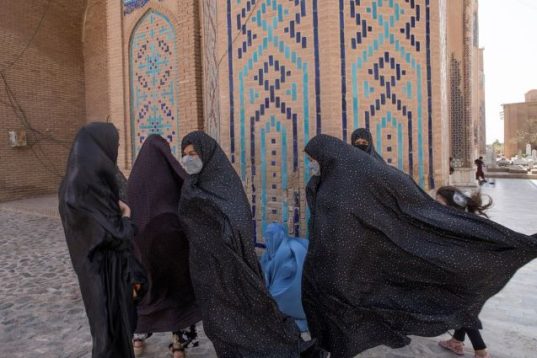
For nearly half a century, Afghanistan has been trapped in an almost endless cycle of war, foreign intervention, and violent extremism. Since the Soviet invasion in 1979, the country has rarely known lasting peace. Empires have come and gone, governments have risen and fallen, and countless lives have been lost. Yet the greatest casualty has not been buildings, armies, or even governments, it has been Afghanistan’s future, according to The Friday Times.
That future has been stolen one classroom at a time.
Afghanistan’s tragedy is unique because it was not simply created by war. Again and again, the country was offered opportunities to rebuild through education, but those opportunities were rejected by forces that understood a simple truth: educated people are harder to control.
Both the Soviet Union and, decades later, the United States invested in expanding schools, universities, and educational opportunities, despite pursuing very different political goals. Neither effort transformed Afghanistan into a stable democracy. But education remained one of the few investments that could have changed generations. Instead, extremist groups repeatedly targeted schools, teachers, and students, viewing books as threats rather than tools of progress.
The contrast with Afghanistan’s Central Asian neighbors is striking. Countries such as Uzbekistan, Kazakhstan, Tajikistan, Turkmenistan, and Kyrgyzstan emerged from the Soviet era with literacy rates exceeding 98 percent. Women became doctors, engineers, scientists, and teachers. Afghanistan, standing beside these nations, took a different path, one where conflict repeatedly defeated the classroom.
Perhaps the greatest irony is that this assault on education is carried out in the name of Islam. The Quran’s first revealed word was “Read,” urging believers to seek knowledge. Islamic civilization once produced some of history’s greatest libraries, universities, mathematicians, physicians, and philosophers. For centuries, learning was considered a religious duty for both men and women.
The Taliban’s restrictions stand in sharp contrast to that tradition. Since returning to power in August 2021, Afghanistan has become the only country in the world where girls are officially barred from secondary schools and universities. More than 2.2 million girls are currently denied secondary education, while hundreds of thousands more reach school age each year only to find classroom doors closed. Female teachers are also leaving the profession, weakening even the country’s remaining primary education system.
The consequences reach far beyond Afghanistan’s borders. A generation deprived of education becomes more vulnerable to poverty, radicalization, and exploitation. Groups such as ISIS-Khorasan and Tehrik-i-Taliban Pakistan continue to exploit instability, while ignorance becomes fertile ground for extremism. Schools that should produce doctors, engineers, and entrepreneurs instead become symbols of opportunities lost.
The international community cannot afford to look away. The United Nations should continue linking recognition and international engagement to equal access to education. Wealthier nations can expand scholarships, online learning, teacher training, and humanitarian support that reaches Afghan children directly. Regional powers also have influence they can use to encourage educational access.
Afghanistan’s greatest battle has never been over territory. It has been over the right to learn.
A nation that closes its schools does more than deny children an education, it locks away its own future. Until every Afghan child can walk freely into a classroom with a book in hand, peace will remain incomplete, and the promise of a brighter Afghanistan will remain painfully out of reach.