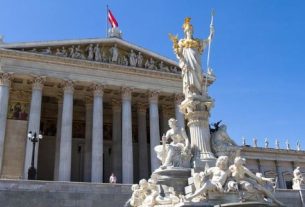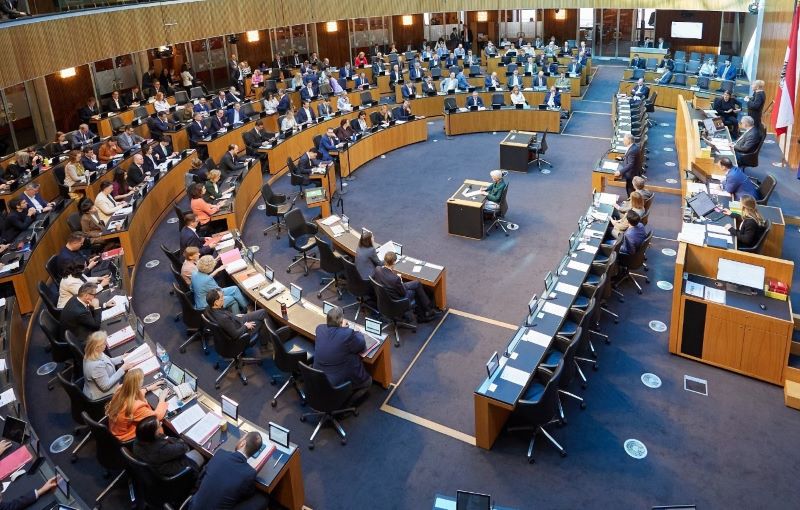
VIENNA: Austria’s National Assembly is set to make it easier to deport foreign prisoners to their home countries, in one of the more high profile decisions expected during a relatively short parliamentary session next Wednesday and Thursday.
Under the justice ministry’s proposal, inmates in Austrian prisons could be transferred to their home countries after serving half of their sentence, even if they refuse. At present, prisoners have the right to veto such a transfer. The new rule will not apply to people convicted of serious violent or sexual offences, or terrorism related crimes, reported by Kurier.
The sessions are likely to be overshadowed by turmoil within the Social Democratic Party (SPÖ), which has led to a change of party leader. The far right Freedom Party has already announced a no-confidence motion against the government.
On Wednesday, lawmakers are also expected to approve a new criminal offence covering the brokerage of organ donations and financially motivated organ removal. The trade in illegally removed organs, as well as their use, would also become criminal offences.
A wide ranging amendment to the Trade Act includes several practical changes. Under certain conditions, solar panels and electric vehicle charging stations will no longer require planning permission. Alpine farms will be allowed to serve draught drinks, and people will be able to prove their age with ID Austria at vending machines or self service checkouts.
The government also plans to strengthen the independence of the Financial Market Authority (FMA). To prevent possible conflicts of interest, senior FMA officials and board members will face “cooling off periods” before moving to a company supervised by the authority. The maximum term for an FMA board member will be set at 14 years.
Those hoping to see Markus Marterbauer, the SPÖ’s designated vice chancellor, make his first appearance in a finance debate may be disappointed. According to current plans, State Secretary Barbara Eibinger-Miedl of the Austrian People’s Party will represent the ministry.
Thursday’s agenda is even shorter. After a question and answer session with Interior Minister Gerhard Karner, the only planned law concerns GeoSphere Austria. It will create the basis for a standardised damage database, allowing natural events, damage and losses to be assessed and compared uniformly.
Such a brief agenda may encourage opposition parties to stage special parliamentary actions. The Greens would be first in line to submit an urgent question or urgent motion.