Kandahar, Afghanistan — The United Nations has issued a grave warning over the deepening healthcare crisis in Afghanistan, where severe funding cuts have forced the closure of hundreds of clinics, leaving millions without access to basic medical services, reported by Tolo News.
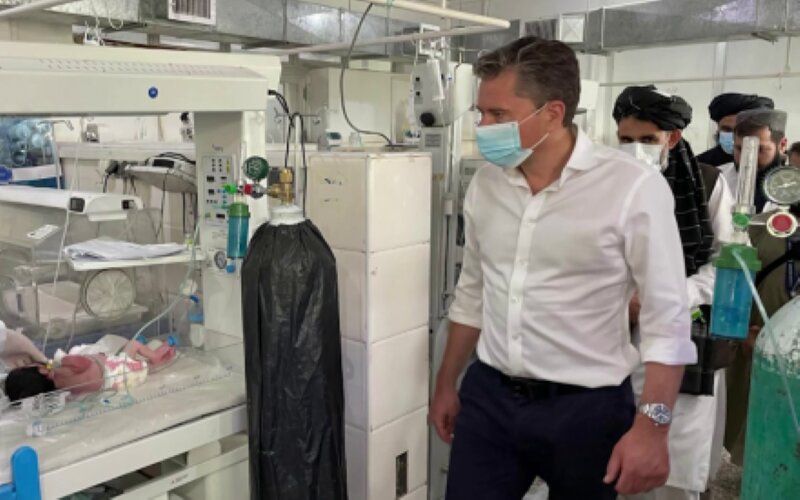
During a recent visit to Kandahar, Tom Fletcher, the UN Under Secretary-General for Humanitarian Affairs, spoke out against the sharp decline in international aid, urging global leaders to see the human cost behind the statistics. “We often speak of funding cuts in charts and figures,” he said. “But I challenge anyone involved in these decisions to step inside a hospital here in Kandahar. In recent months, we’ve had to shut down 400 medical centres, cutting off essential care to over 3 million people.”
Fletcher highlighted that the burden now falls on the few remaining hospitals, which are overwhelmed and under-resourced. Medical staff, especially women, are suffering financially too. Many have seen their salaries slashed by 50 to 60 percent, making it harder for them to continue their critical work.
The warnings from the UN follow similar alerts from health organizations. The World Health Organization (WHO) announced earlier that 80 percent of the clinics it supports in Afghanistan may shut down by June 2025 if funding isn’t restored. Humanitarian agency Save the Children also confirmed the closure of 18 of its supported facilities, with more at risk.
Local experts are also voicing concerns. Sayed Abdullah Ahmadi, a prominent Afghan doctor, emphasized that foreign aid alone cannot sustain the country’s fragile healthcare system. “Even with international support, without a clear structure and proper regulations, our health system will collapse,” he said. He called on the Ministry of Public Health to strengthen local leadership and train domestic specialists in system development.
In response to growing concern, the Ministry of Public Health has attempted to calm fears. Spokesman Sharafat Zaman Amarkhil stated, “The central health system is still operational. Essential services have not stopped, and we are actively working on alternative ways to fill the gaps left by international partners.”
Still, the situation remains urgent. Without renewed support, millions of Afghans may be left with no access to healthcare — a quiet emergency unfolding far from the spotlight.