Proxy Shadows: How Pakistan’s Past Shaped Its Present Rift With the Taliban
ISLAMABAD — The unraveling of Pakistan’s once-strategic relationship with Afghanistan’s Taliban rulers marks a grim irony decades in the making. What began as a calculated policy of influence through proxies has evolved into a volatile border rivalry and a haunting reminder that statecraft built on militant patronage rarely ends well, according to “The Friday Times, Pakistan”.
Today, the two neighbors stand locked in a cycle of distrust, their frontier simmering with clashes and rhetoric sharper than bullets. Yet this crisis is not an act of sudden betrayal; it is the culmination of years of misjudged assumptions and the poisonous legacy of Cold War-era politics.
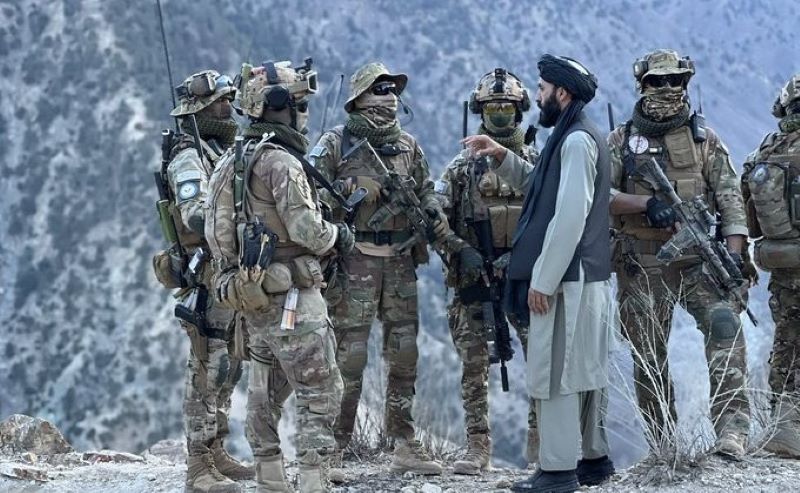
During the 1990s, Pakistan was among the few nations to recognize the first Taliban regime, believing the group could serve as a strategic buffer in Afghanistan a “friendly depth” against India. When the Taliban returned to power in 2021, Islamabad again moved quickly to advocate for global recognition of the turbaned clerics now ruling Kabul. The gesture was rooted in nostalgia, not realism.
But the embrace was never mutual. As the Taliban consolidated control, they began harboring the banned Tehreek-e-Taliban Pakistan (TTP), an ideological offshoot turned deadly foe. Instead of gratitude, Islamabad received cross-border terrorism, targeted ambushes, and a wave of attacks that has cost hundreds of lives.
Repeated Pakistani efforts, from diplomatic envoys to delegations of religious scholars, have failed to convince Kabul to curb the TTP. Instead, the Afghan leadership has used its leverage to pressure Pakistan into talks with the militants, effectively legitimizing those who once terrorized its citizens. Each overture has only deepened the wound.
The result is a dangerous impasse. Recent skirmishes along the border nearly ignited a broader confrontation, avoided only by diplomatic restraint. But the propaganda war that followed with both sides trading blame for instability has amplified mistrust across the frontier. Millions on both sides now live under the shadow of another possible conflict.
Analysts and historians are quick to remind that this moment was not born in isolation. Pakistan’s reliance on proxies, a strategy dating back to the 1970s was once seen as a geopolitical necessity. Under Zulfikar Ali Bhutto, and later General Zia ul Haq, Islamabad became a central player in the Afghan jihad against Soviet forces. Billions in foreign funding and weapons flooded the region, empowering a generation of ideologues who would later turn their guns inward.
When the war ended, the sponsors withdrew, leaving Pakistan to face the fire it had helped ignite. The policy that once promised strategic depth instead produced strategic decay — a region awash with militancy, sectarianism, and diplomatic isolation.
History offers parallels. Egypt’s ill-fated intervention in Yemen, Libya’s meddling in African conflicts, and Syria’s long entanglement in Lebanon all show how nations that export instability often import it back home. Even Saudi Arabia, after supporting conservative clerics and regional interventions, faced extremist backlash and was forced to redefine its ideological posture in recent decades.
For Pakistan, the lesson should be clear. Using militancy as an instrument of policy has eroded its internal security and international standing. The current standoff with the Afghan Taliban; once considered ideological kin; exposes the ultimate futility of relying on religious proxies for national strategy.
The path forward cannot lie in military escalation. A full-scale confrontation would push the Taliban closer to the TTP, ignite chaos along the border, and devastate Pakistan’s fragile economy, already weakened by political strife and regional isolation. Worse, it could open the door for India to deepen its influence in Kabul, further complicating Islamabad’s security calculus.
Instead, Pakistan must pivot toward diplomacy anchored in democratic principles. Its best hope lies in rallying international partners from Washington to Beijing and Moscow around a shared goal: encouraging free and transparent elections in Afghanistan.
Such a process, though distant, remains the surest route to dislodging extremist rule. The Taliban may claim mass support, but few Afghans would freely vote for a regime that silences women, bans education, and persecutes minorities. Empowering Afghans to choose their leaders would be a more decisive blow to extremism than any airstrike.
The Afghan diaspora and civil society, too, have shown readiness to reclaim their country’s narrative, one built on pluralism rather than repression. For Islamabad, aligning with this vision would not only help repair its regional image but also correct the moral deficit left by decades of interference.
Pakistan’s dilemma is ultimately one of reckoning with history, with ideology, and with itself. The ghosts of its proxy past still roam the mountains of Khyber and the corridors of Kabul. Whether the state exorcises them through wisdom or repeats its mistakes will define not only its borders, but its very future.