ISLAMABAD: Pakistan may produce enough food to fill plates, but not enough of the right food to protect health, the United Nations Food and Agriculture Organisation (FAO) has warned, calling for a sweeping transformation of the country’s agrifood system.
In its latest assessment, Food Supply for Healthy Diets in Pakistan, the FAO said that more than 60 per cent of Pakistanis cannot afford a healthy diet. The finding points to a deep and troubling divide between what the country grows, sells and consumes, and what its people need for good nutrition.
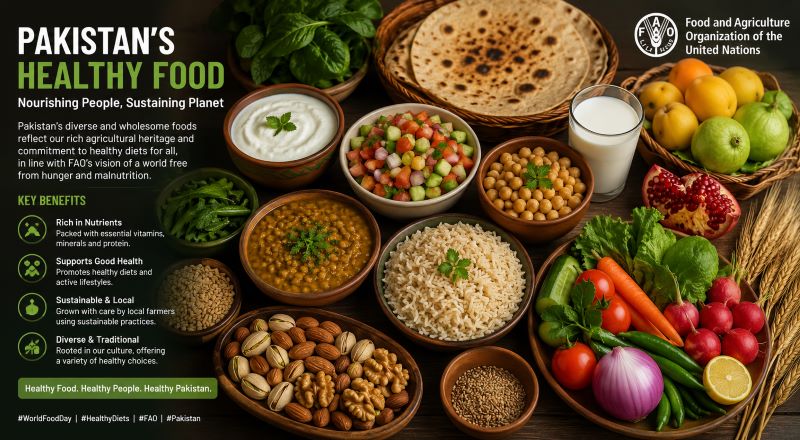
The report found a persistent mismatch between the food available in Pakistan and the quantities required for a healthy diet under the country’s food-based dietary guidelines. While staples and sugar are supplied in quantities that exceed nutritional needs, there are serious shortages of vegetables, fruits, roots, tubers, legumes and pulses the very foods that help protect against disease.
The consequences are visible across the country. Malnutrition remains widespread, while diet-related non-communicable diseases are rising. The FAO said unhealthy diets are a common cause of both undernutrition and overnutrition, contributing directly to illness and death.
“Enabling access to healthy diets for all is essential to achieving Pakistan’s national development priorities,” the assessment stated, describing affordable and nutritious food as a policy imperative rather than a luxury.
The FAO urged policymakers to act on several fronts. It recommended updating dietary guidelines, using nutrition education to change eating habits, and introducing taxes on sugary drinks and foods high in salt, sugar and unhealthy fats. It also called for clear front-of-pack labelling, restrictions on the marketing of unhealthy foods to children, and stronger school meal and social protection programmes.
At the same time, the agency said agricultural policy must shift towards producing more fruits, vegetables, pulses, roots and tubers, alongside milk in suitable regions. Food processors, it added, should be encouraged to meet safety standards and reduce salt, sugar and unhealthy fats in their products.
Better storage, cold chains and market infrastructure, the FAO said, could reduce food losses and make healthier foods more widely available. With consistent monitoring, it argued, Pakistan could move closer to a future in which nutritious food is not merely available, but affordable for all.