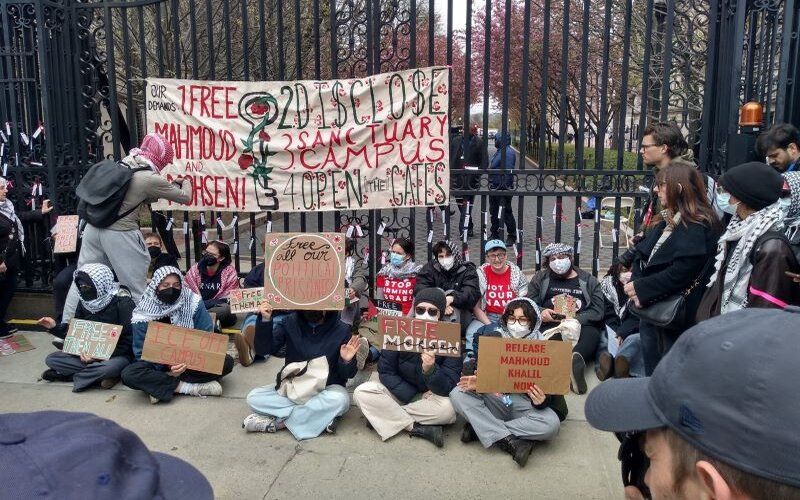
NEW YORK — April 22: In a dramatic and defiant act of protest, around two dozen demonstrators chained themselves to the gates of Columbia University, raising their voices against the U.S. government’s detention of two non-citizen anti-Israel protest leaders. The protest unfolded on the public sidewalk outside the university, yet it forced campus security to shut down the entrance, reported by The Nation Newsweb.
The scene was charged with emotion and symbolism. Some protesters fastened themselves to the gate with bicycle locks wrapped tightly around their waists, a silent yet powerful form of resistance. Clapping and singing echoed through the street as the group chanted the old anti-war refrain, “I ain’t gonna study war no more.”
Wearing keffiyehs and masks, many masked their identities while others boldly displayed who they are—donning watermelon-patterned yarmulkes and shirts from the anti-Zionist Jewish group, Jewish Voice for Peace. Their appearance painted a vivid picture of solidarity across faith and background.
A protest organizer passionately declared, “We’re here to say we see what’s happening and we refuse to be silent. Columbia wants us to ignore how they’re backing Israel. But we won’t.”
This protest comes amid growing unrest on campuses across the U.S., where students and activists demand that institutions take clearer stances on global conflicts. At Columbia, a school known for its history of student activism, the message rang loud and clear: the voices of dissent will not be easily locked away.
As tensions continue to rise, Columbia’s role in the broader debate over U.S. and institutional support for Israel faces increased scrutiny—and the protests show no signs of quieting.