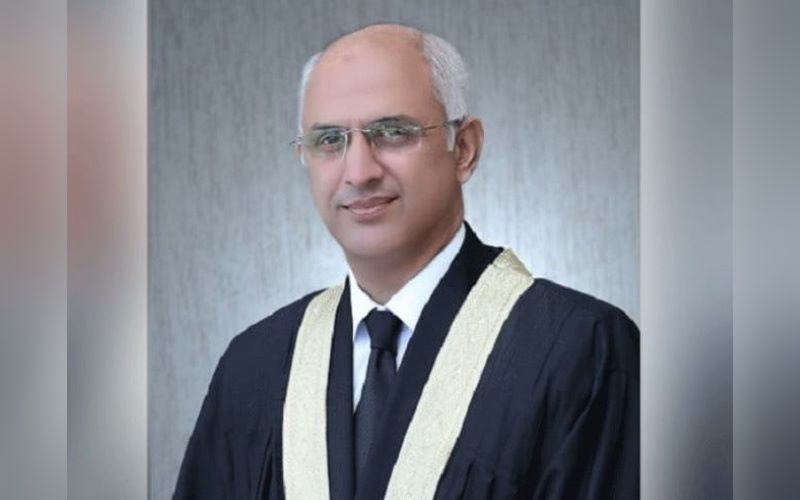
Lahore High Court Justice Mohsin Akhtar Kayani has resigned, saying his conscience no longer allows him to remain on the bench. In a resignation letter sent to the president, he cited health concerns and what he described as the executive’s growing influence over Pakistan’s judiciary.
Justice Kayani, transferred from the Islamabad High Court to the Lahore High Court in May, said the 26th and 27th Constitutional Amendments had weakened the independence and institutional integrity of the high courts. He was due to retire in 2032.
“In my considered view, the changes introduced through the 26th and 27th Constitutional Amendments have compromised the independence and institutional integrity of the high courts,” he wrote.
The judge said the executive’s increasing role in judicial appointments and transfers had damaged public trust in the courts. “Such interference has, in my assessment, seriously eroded public confidence in judicial independence and the fairness of the judicial process,” he said.
Justice Kayani also expressed concern for ordinary litigants, whom he called the main stakeholders in the justice system. He said their suffering was deepening while their needs were too often neglected.
Calling his decision painful, he wrote that judicial office must remain inseparable from independence, loyalty to the Constitution and the protection of human dignity. He said he would return to legal practice to continue serving people and promoting legal awareness.
A judge known for human-rights rulings, Justice Kayani was appointed to the Islamabad High Court in December 2015. He handled several prominent cases involving fundamental rights and enforced disappearances, and had publicly criticized the 27th Amendment.
In April, the Judicial Commission of Pakistan approved his transfer to the Lahore High Court, along with the transfers of Justices Babar Sattar and Saman Riffat Imtiaz to other high courts. It was the first direct application of the 27th Amendment to the high courts. The amendment removed the need for a judge’s consent before transfer and allowed the commission to move judges between provinces.
All three transferred judges had earlier been among six Islamabad High Court judges who wrote to the Supreme Judicial Council about alleged interference by intelligence agencies.
In February 2025, Justice Kayani was also among five judges who objected to Justice Sardar Sarfraz Dogar’s appointment as Islamabad High Court chief justice, questioning his seniority and the legitimacy of the elevation. Justice Dogar took the oath a week later; the five judges did not attend the ceremony.
Justice Kayani’s resignation deepens concern that Pakistan’s judiciary is under mounting political and institutional pressure.