Narrow Margin for EU Membership
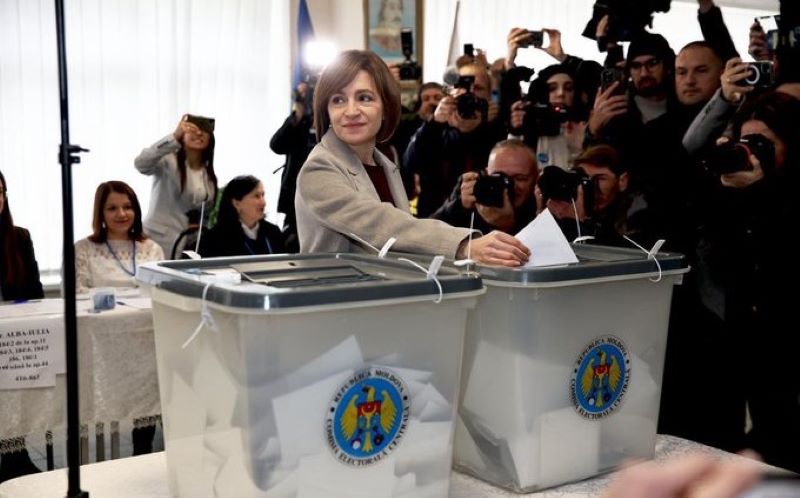
In a closely watched referendum, Moldova has voted in favor of joining the European Union with a slim majority of 50.28%. The outcome comes amid heightened tensions and accusations of foreign interference, particularly from Russia. With over 99% of the votes counted, the pro-EU faction led by President Maia Sandu edged out the anti-EU camp by just 8,000 votes.
Accusations of Foreign Meddling
President Sandu, who has been a strong advocate for EU membership since Russia’s invasion of Ukraine in 2022, attributed the tight result to “an unprecedented assault on our country’s freedom and democracy.” She specifically pointed to “criminal groups” collaborating with foreign forces opposed to Moldova’s national interests. In response, the Kremlin dismissed these claims, calling for Sandu to “prove” any allegations of electoral interference.
Presidential Elections and Challenges Ahead
Coinciding with the referendum, Moldova held its presidential elections on October 20. Sandu secured more than 42% of the vote, while her main rival, Alexandr Stoianoglo, a former prosecutor backed by the pro-Russian Socialists, garnered an unexpected 26%. With a second round scheduled for November 3, analysts believe that the slim margin in the referendum could complicate Sandu’s re-election efforts. Many voters who supported other candidates are expected to favor Stoianoglo in the upcoming runoff.
Concerns About Voter Integrity
The backdrop to the referendum has been marred by fears of Russian interference and widespread allegations of vote-buying. Police have reported hundreds of arrests connected to an extensive scheme that could affect up to 25% of the ballots cast. Officials allege that millions of dollars from Russia have been funneled into Moldova to influence voters, with links to Ilan Shor, a fugitive businessman and former politician.
The Road Ahead for EU Accession
Political analysts are cautious about the implications of the referendum result for Moldova’s EU accession talks, which began in June. Florent Parmentier, a political scientist from Sciences Po in Paris, characterized the referendum outcome as a surprise that weakens the pro-European image of both the population and Sandu’s administration. While he does not anticipate that the narrow “yes” vote will significantly hinder negotiations with Brussels, he emphasized that a clearer affirmative result would have served as a more robust signal of public support for EU integration.
The Stakes for Sandu’s Administration
Critics of Sandu’s government argue that she has fallen short in addressing rampant inflation and judicial reforms in one of Europe’s poorest countries. In contrast, Stoianoglo has positioned himself as a candidate for “restoration of justice” and a “balanced foreign policy,” appealing to voters disillusioned with the current administration.
As Moldova stands at a pivotal crossroads, the interplay between domestic politics and foreign influences will likely shape its path toward potential EU membership.