

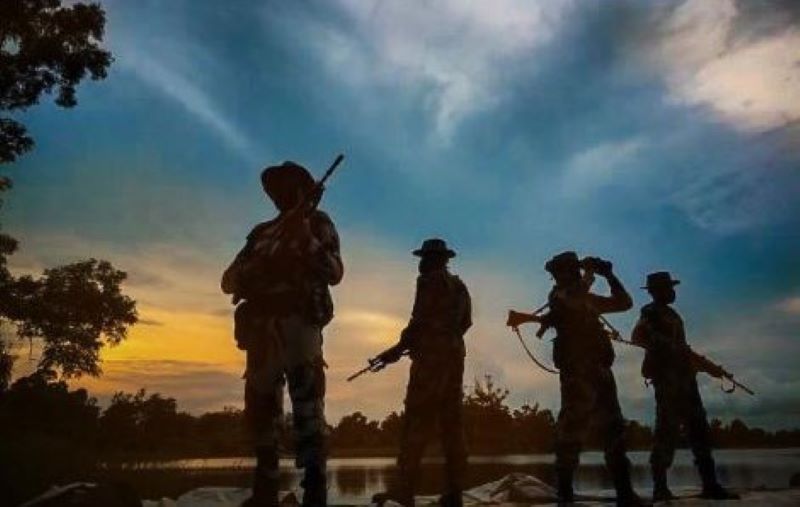
For generations, Kashmir has stood as a symbol of division between India and Pakistan, a territorial dispute frozen in time, defined by military standoffs and diplomatic deadlock. But as the planet warms and glaciers melt, a new and far more urgent question emerges: Can South Asia afford to keep fighting over land that climate change may render uninhabitable?
The answer, increasingly, is no.
Kashmir sits at the heart of the Himalayas, often called the “Third Pole” for holding one of Earth’s largest freshwater reserves outside the Arctic and Antarctic. Yet this vital region is under siege not from armies, but from accelerating environmental collapse. Glaciers are retreating, rainfall patterns have turned erratic, and extreme weather events are reshaping the landscape. These changes threaten the water supply, food security, and livelihoods of millions across South Asia.
But while nature sounds the alarm, India and Pakistan remain locked in a conflict that drains resources, stifles cooperation, and blocks the very collaboration needed to survive what’s coming. Military budgets swell while climate adaptation programs languish. Research on shared river systems and glacial health remains fragmented. Disaster preparedness takes a backseat to defense readiness.
The cost of this paralysis extends beyond the environment. South Asia ranks among the world’s most climate-vulnerable regions, facing crop failures, infrastructure damage, mass displacement, and economic shocks. Yet regional hostility continues to strangle trade, investment, and collective growth. Without peace, resilience remains a distant dream.
Climate change does not recognize borders or ceasefire lines. It cannot be deterred by nuclear arsenals or negotiated at summits. Against such a threat, cooperation is not idealism, it is survival.
There is another path forward. Joint initiatives on water governance, renewable energy, biodiversity conservation, and disaster response could rebuild trust where decades of diplomacy have failed. Rivers could connect nations instead of dividing them. Scientific collaboration could replace suspicion. Kashmir’s stunning natural heritage could become a foundation for sustainable livelihoods rather than a battlefield.
A new generation across South Asia understands this urgency. Young people mobilizing for climate justice recognize that inherited conflicts jeopardize their futures far more than compromise ever could. They know that environmental security and political stability are inseparable and that peace is not a luxury but a prerequisite for survival.
On Kashmir Day, reflection must evolve into action. Resolving this dispute requires political courage, but it also demands public pressure. Citizens must choose narratives of coexistence over confrontation, dialogue over discord.
Because in a century shaped by climate uncertainty, the most strategic decision South Asia can make is choosing peace. No nation can protect its environmental future alone, not when food systems, water resources, and ecosystems ignore every border we’ve drawn.
Protecting the planet begins with learning to live peacefully upon it.





