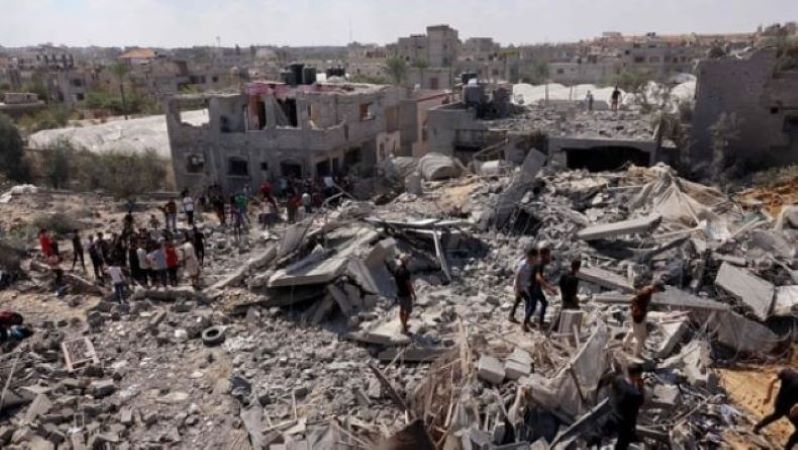
According to Voice of America news, the Gaza Strip is facing unprecedented destruction, with Palestinians desperate to leave tent camps and return to their homes. However, extensive devastation from the Israel-Hamas conflict has left little to rebuild, and the path forward remains uncertain.
Israeli bombardments and ground operations have reduced entire neighborhoods to rubble. Critical infrastructure, including water, electricity, and hospitals, has been destroyed. The United Nations estimates that 69% of Gaza’s structures have been damaged or destroyed, including over 245,000 homes. Satellite data reveals that the northern part of Gaza, sealed off by Israeli forces since October, has suffered the heaviest destruction.
The World Bank estimates the damage from the initial months of the war at $18.5 billion, nearly matching the combined economic output of Gaza and the West Bank in 2022. The scale of destruction has created a staggering 50 million tons of rubble, which the U.N. predicts would take 15 years to clear, even with 100 trucks working full time. This debris contains unexploded ordnance, toxic materials, and human remains, complicating removal efforts.
The war began with Hamas’s October 7, 2023, attack on Israel, killing 1,200 people and abducting 250. Israel responded with an extensive military campaign, claiming it has killed over 17,000 Hamas militants, though evidence has not been provided. Gaza’s Health Ministry reports over 46,000 Palestinian deaths, including many women and children, though it has not clarified how many were combatants.
A phased ceasefire agreement has sparked hope for reconstruction, envisioning a three- to five-year rebuilding plan once hostages are released and Israeli troops withdraw. However, the plan’s success hinges on lifting the blockade imposed by Israel and Egypt since Hamas seized power in 2007. Critics argue the blockade constitutes collective punishment, while Israel defends it as necessary to prevent Hamas from rebuilding military capabilities.
Governance remains a critical challenge. The international community advocates for a revitalized Palestinian Authority supported by Arab countries, but Israel opposes any role for the authority and rejects a Palestinian state. Without governance clarity, international donors are hesitant to invest, leaving Gaza’s future uncertain.
The rebuilding of Gaza requires billions in aid, cooperation among stakeholders, and the resolution of longstanding political and security issues. Until then, many Palestinians may remain in sprawling tent camps, highlighting the dire humanitarian crisis in the region.