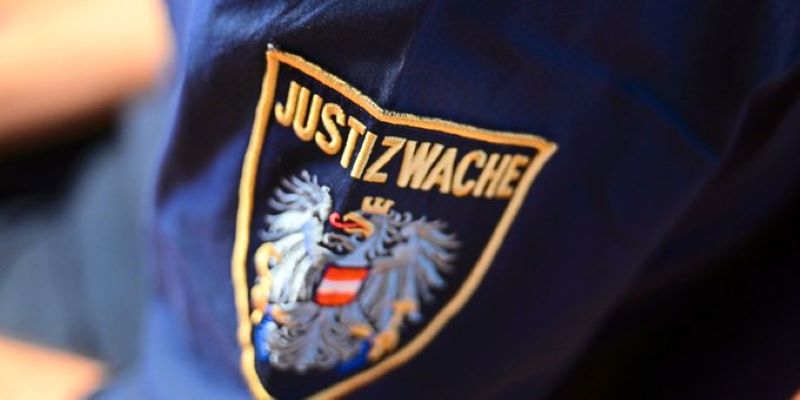
In Austria’s Justizanstalt Hirtenberg prison, a tragic and disturbing incident has sparked widespread outrage. A 30-year-old inmate, severely mentally ill, died on December 3, 2025, after a violent confrontation during preparations for his transfer to a psychiatric hospital ward.
According to detailed reporting by the weekly magazine Falter, the man, described in psychiatric notes as “acutely psychotic, disorganized,” hallucinating, aggressive, and unable to assess dangers, was evaluated on December 2. Doctors ordered immediate placement in a specially secured cell with video surveillance and arranged psychiatric hospitalization. Yet, against medical instructions, his isolation cell contained a concrete bed and table.
The next morning, during a pre-transport medical check, he failed to respond to guards. Surveillance footage showed heightened agitation as he climbed onto the table. Six officers in helmets, shields, and protective gear entered the cell after warnings. Official logs claim he slipped on a wet floor and struck his head hard on the concrete bed. He resisted leg restraints, leading to reported punches to his torso and legs, plus baton strikes.
Restrained with ankle cuffs, he was hosed down in the shower, where he bit, spat, and fell again, hitting his head on walls and floor. A spit guard was applied, followed by full-body fixation, possibly including a neck clamp. Loaded into a prisoner transport bus, he soon became unresponsive, having slid under seats. Resuscitation efforts lasted nearly two hours before he was rushed to Eisenstadt Hospital, where he died that evening.
Early forensic findings revealed severe injuries; skull fractures, a broken larynx, internal bleeding, and multiple rib breaks, suggesting extreme force. The Eisenstadt public prosecutor’s office now investigates twelve justice guards for bodily harm causing death under abuse of official authority. The officers have been suspended from duties. A full autopsy report remains pending as of late January 2026.
The family initially believed the death was natural. Prison social services informed the mother of “sudden” multi-organ failure linked to a weak heart; his death notice read “completely unexpected.” The Justice Ministry insists it provided information based on available facts at the time and offered ongoing support. It expresses deep sorrow, vows full cooperation with probes, and promises reforms to training and protocols.
Volksanwältin Gabriela Schwarz called for a thorough, gapless clarification. Green politician Alma Zadić described the accounts as “shocking,” warning that proven misconduct would damage Austria’s rule of law and criticizing perceived delays in transparent communication.
As investigations continue into early 2026, the case raises serious questions about handling vulnerable inmates in Austria’s prison system. All involved are presumed innocent until proven otherwise.