

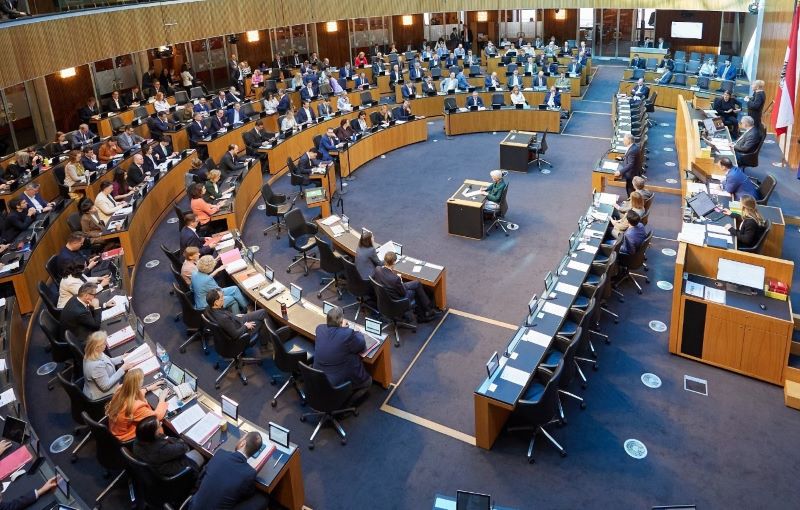
Austria’s National Council has passed legislation introducing a Continuing Education Allowance, replacing the now-abolished Bildungskarenz (education leave). The measure was approved solely by the ruling coalition of the ÖVP, SPÖ, and NEOS, while the FPÖ and Greens voted against it, arguing that the reform prioritizes employers’ interests over workers’ rights.
Government lawmakers defended the overhaul, claiming the former system was frequently misused as extended leave or parental time-off. “That’s not what education leave was meant for,” said Bettina Zopf of the ÖVP. Johannes Gasser of NEOS added that the old program had caused a “cost explosion.”
Social Affairs Minister Korinna Schumann (SPÖ) hailed the vote as a “significant step” toward improving opportunities for workers with lower qualifications and incomes. She emphasized that, even under the old model, employees still needed their employer’s approval to participate.
Criticism from the Opposition
The Greens and Freedom Party (FPÖ) sharply opposed the measure. Green MP Markus Koza argued it was not a true successor to the Bildungskarenz, saying it stripped workers of their autonomy to choose their own training paths. “It’s now about what benefits the company, not the employee,” he said.
FPÖ lawmaker Dagmar Belakowitsch denounced the reform as a “systemic upheaval”, accusing the government of using the new program which targets low-skilled workers to favor asylum seekers, a claim the ruling parties flatly rejected.
New Residence Permit for Cross-Border Workers
In a related vote, the coalition and the Greens approved a new residence permit for cross-border workers. The rule allows non-EU residents with permanent status in a neighboring country to take up jobs in Austria—provided the position cannot be filled otherwise. Officials said the measure aims to ease the skilled labor shortage.





