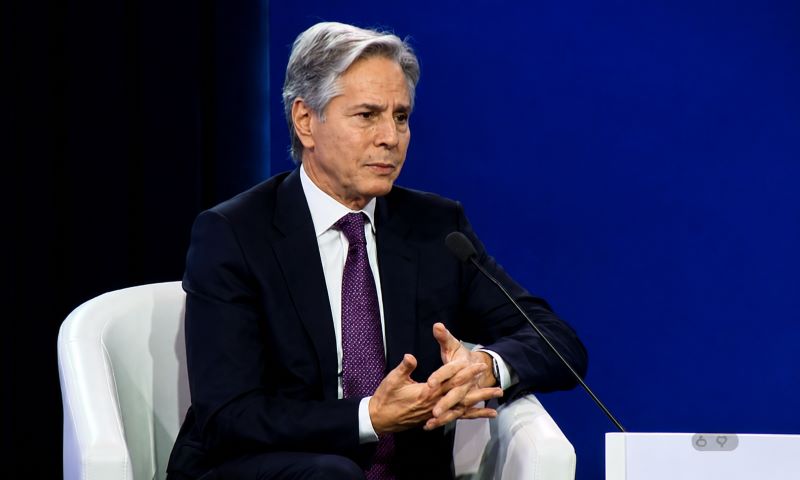
For decades, Washington looked at Pakistan through the lens of necessity rather than judgment. That is the candid admission of former US Secretary of State Antony Blinken, who says the demands of the Cold War and the war in Afghanistan led America to take a softer, less critical stance toward Islamabad than it otherwise might have, according to TOLOnews.
In an interview with the Indian outlet Hindustan Times, Blinken said the United States now has a chance to reassess its approach and to take further steps to address the balance of power between Pakistan’s civilian and military institutions. “There was a matter of expedience throughout the Cold War, dealing with the Soviet Union,” he said, recalling the years when friendships were chosen by strategy and not by principle.
The September 11 attacks, he explained, added a new chapter to that story. As American forces fought in Afghanistan, Washington needed supply routes, overflight access and other logistical help, and Pakistan was the door through which much of it passed. Those requirements shaped the relationship for two decades. “That’s now all over and done with,” Blinken said, “and that’s allowed, I think, a recalibration of how we see it.”
Yet the former diplomat was careful not to suggest that America should dictate Pakistan’s path. Decisions about the country’s political system, he stressed, belong to its people and cannot be imposed from outside. “These are decisions for Pakistanis to make about the nature of their society, the nature of their governance,” he said. Washington, he added, can offer substantial support, but the deepest choices about the nation’s future must be made by Pakistanis themselves.
Blinken also drew a clear line between America’s two great South Asian relationships. Ties with India, he said, are global in nature, while the relationship with Pakistan remains mainly regional. Cooperation with Islamabad is still needed in some areas, especially counterterrorism, but he insisted that Washington’s bonds with the two neighbours are “fundamentally different.”