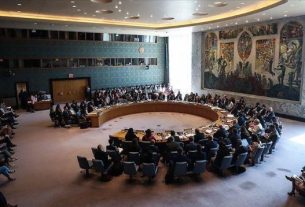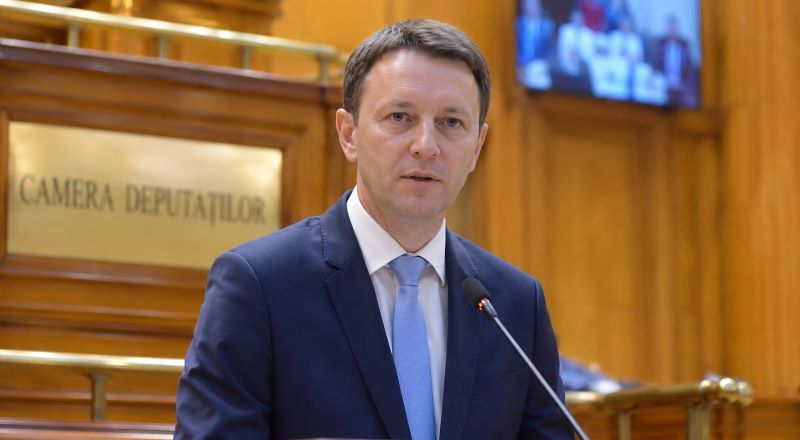
BUCHAREST: Romania’s political crisis deepened on Wednesday after Parliament rejected the centre right government proposed by Prime Minister designate Siegfried Mureșan, increasing the possibility of early elections and giving fresh momentum to the country’s far right.
Mureșan, a liberal member of the European Parliament, won 182 votes, well below the 233 needed to form a government. The far right Alliance for the Union of Romanians, or AUR, largely boycotted the vote, reported by Al Jazeera News.
The 45 year old had proposed a reform focused programme supported by the National Liberal Party, the Save Romania Union and the ethnic Hungarian UDMR party. It was the latest attempt to end a political crisis that began in May, when Prime Minister Ilie Bolojan’s pro-European coalition government collapsed after a no-confidence vote.
President Nicușor Dan said he would meet parliamentary party leaders before deciding on the next step. He has repeatedly warned that early elections could prolong instability and weaken confidence among citizens and financial markets.
Under Romania’s Constitution, the president may dissolve Parliament after lawmakers reject two proposed governments within a specified period. That condition has now been met, but snap elections are not automatic. Dan may still nominate another candidate in an effort to form a government.
The crisis is unfolding as Romania faces severe economic pressure, including the European Union’s highest public deficit and inflation rate. A prolonged period without a fully empowered government could make it harder to address those problems.
The far right, which controls about one third of Parliament, has called for early elections and threatened to seek Dan’s impeachment if he refuses to call them when legally possible. The AUR has also gained strength in opinion polls, raising concerns that a new election could produce a more fragmented and nationalist Parliament.
Romania, an EU and NATO member bordering Ukraine, has not held snap elections since the end of communist rule in 1989. Political analyst Cristian Pîrvulescu warned that an election campaign could delay the formation of a new government by several months.
“The country is in a very complicated economic situation,” he said. “Four months is already a very long time.”