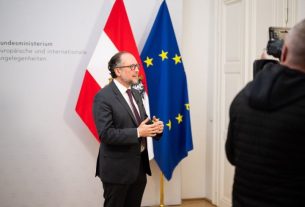
Austria is reshaping its frontline immigration operations as illegal border crossings fall to historic lows, prompting the government to shift asylum police officers in Burgenland into border-security roles, according to Austrian News Agency APA. Interior Minister Gerhard Karner announced the changes on Thursday, portraying them as part of a broader effort to strengthen national security. “We are saving on asylum structures and investing in safety,” he said.
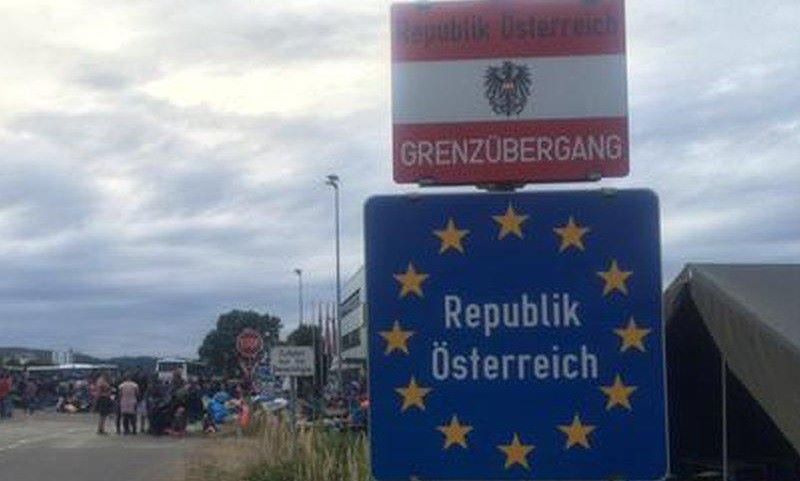
According to the Interior Ministry, years of tightened controls along the EU’s external frontier; supported by new surveillance technology, increased staffing, and operations such as Austria’s “Operation Fox” on Hungarian territory have helped drive unauthorized entries “close to zero.” The ministry noted that in the same week of 2022, authorities intercepted more than 1,900 migrants in Burgenland; in 2025, that number fell to just 34.
With migrant arrivals dropping sharply, the government will dissolve the asylum registration center in Schattendorf at the end of the month. The facility, opened in 2016 at the height of Europe’s refugee influx, currently employs 23 officers. They will now be reassigned primarily to border patrols or redistributed across nearby police stations. The local Schattendorf police precinct will remain operational and unaffected by the restructuring.
Karner framed the decision as both practical and necessary in light of shifting realities on the ground. “Illegal migration has been massively reduced in the past two years,” he said. “This makes it possible to deploy more officers to border protection and inspections, with the clear goal of driving illegal migration down to zero. We will and must continue to ease the burden on the population.”
The move reflects Austria’s broader strategy of tightening enforcement while scaling back infrastructure once dedicated to high-volume asylum processing. Officials presented the transition not as a retreat from humanitarian responsibilities, but as a recalibration in response to changing pressures along one of Europe’s most closely watched borders.