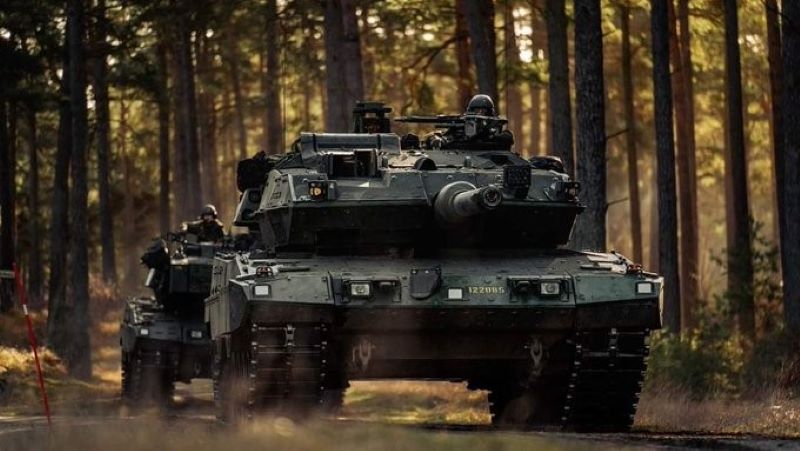
In a significant demonstration of solidarity and commitment to collective defense, Sweden has dispatched a mechanized infantry battalion to Latvia, marking its most substantial military operation since joining the North Atlantic Treaty Organization (NATO) in March 2024. This deployment underscores the shifting security dynamics in Europe, particularly in light of Russia’s ongoing military activities in Ukraine.
Arrival and Integration
On January 18, 2025, a Swedish contingent comprising 550 troops arrived at the port of Riga, Latvia’s capital. The battalion’s arrival was facilitated by a coordinated effort involving the Swedish Air Force and naval units from both Sweden and Latvia. This force is set to integrate into a Canadian-led multinational brigade stationed near Ādaži, a strategic location approximately 25 kilometers northeast of Riga. The primary objective of this deployment is to bolster NATO’s deterrence capabilities along its eastern flank, a region that has become increasingly volatile due to heightened tensions with Russia.
Strategic Significance
Latvia shares its eastern border with Russia and its southeastern border with Belarus, a close ally of Moscow. The proximity of these nations to NATO territories has amplified security concerns among member states, particularly following Russia’s annexation of Crimea in 2014 and the subsequent invasion of Ukraine in 2022. Sweden’s deployment is a tangible manifestation of its commitment to NATO’s collective defense principles, as articulated in Article 5 of the NATO Treaty. Lieutenant Colonel Henrik Rosdahl, commander of the 71st Battalion, expressed pride in contributing to the alliance’s defense efforts, stating, “It’s a historic day, but at the same time, it’s our new normal.”
Sweden’s Evolving Defense Posture
Historically, Sweden maintained a policy of neutrality, refraining from military alliances for over two centuries. However, the geopolitical landscape in Europe has undergone significant transformations, particularly with Russia’s aggressive actions in Ukraine. In response to these developments, Sweden formally joined NATO in March 2024, becoming the alliance’s 32nd member. This strategic shift was mirrored by Finland, which acceded to NATO in April 2023, both nations citing the imperative to enhance their security frameworks in the face of regional threats.
Regional Security Enhancements
In addition to troop deployments, Sweden has committed to augmenting NATO’s maritime capabilities in the Baltic Sea. The Swedish Armed Forces announced plans to contribute up to three warships to a NATO mission aimed at enhancing security and safeguarding underwater infrastructure from potential sabotage. This initiative includes the deployment of an ASC 890 surveillance aircraft and the provision of multiple coast guard vessels. These measures are a proactive response to recent incidents in the Baltic Sea, such as damage to undersea cables and pipelines, which have raised concerns about potential hostile activities.
Broader NATO Initiatives
Sweden’s contributions are part of a broader NATO strategy to reinforce its eastern defenses. The alliance has established multinational battle groups in eight countries in Eastern Europe, including Estonia, Lithuania, Latvia, and Poland, as part of its Enhanced Forward Presence (EFP) initiative. These deployments serve as a deterrent against potential aggression and demonstrate NATO’s commitment to defending its member states. The integration of Swedish forces into these structures signifies a deepening of military cooperation and interoperability within the alliance.
Conclusion
Sweden’s deployment of troops and naval assets to Latvia represents a pivotal moment in its defense policy, transitioning from longstanding neutrality to active participation in collective security arrangements. This move not only strengthens NATO’s posture in the Baltic region but also sends a clear message of unity and resolve in the face of evolving security challenges posed by Russia’s actions in Eastern Europe.