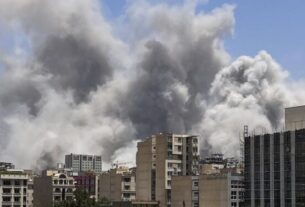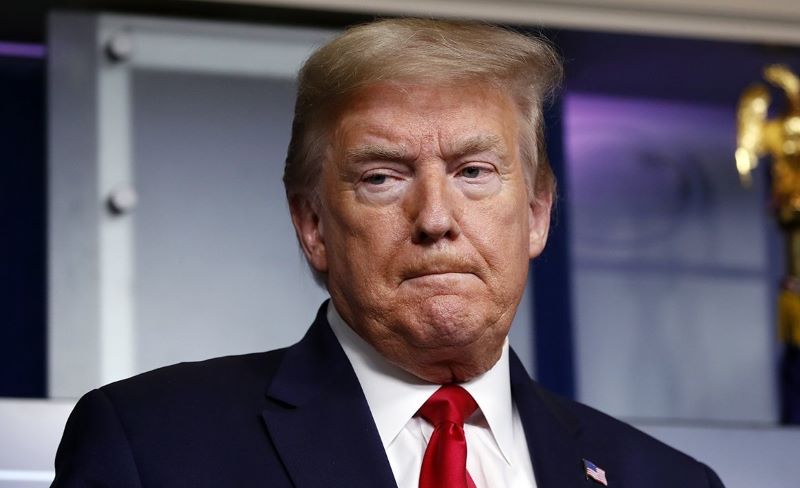
President Donald Trump said on Friday that the United States could bring the war with Iran to a rapid end, but left open whether Washington should press for a swift conclusion or allow the conflict to fade gradually. His remarks came as Iran warned that any renewed American and Israeli assault could draw undersea communications cables in the Gulf into the fighting.rmb, reported by Arab News
“We could end it very quickly,” Trump told reporters on the White House South Lawn before departing for Florida. “Do we want to finish it off or just want to let it wither?” He added that oil was continuing to move through the Strait of Hormuz and said, “We are getting everything we want.”
Behind the president’s words lies a widening threat. Two senior Iranian security officials told Reuters that Tehran has prepared detailed plans to target undersea cables in the Gulf if the United States and Israel attack Iran again. The officials, who spoke anonymously, did not disclose how or where such operations would be carried out, but one said Iran would try to prevent repairs in order to prolong disruptions to communications and internet services.
“If Iran is attacked, there will be no more red lines … from undersea cables to military bases, including covert ones,” one official said, warning Washington not to “play with fire.” Yadollah Javani, deputy head of political affairs for Iran’s Revolutionary Guards, said Iran could target seven major internet cables beneath the Strait of Hormuz if Iranian infrastructure came under attack.
The threat highlights how modern conflict increasingly reaches beneath the sea. Undersea cables carry about 99 per cent of global internet traffic, according to the International Telecommunication Union. Yet analysts say the worldwide effect of attacks in the Strait of Hormuz could be limited, because less than 1 per cent of international bandwidth passes through it.
Even so, the regional consequences could be severe. Multiple cable cuts could slow internet services and disrupt banking, e-commerce and cloud computing. Repairs during wartime could prove difficult, with higher insurance costs and delays in obtaining permits to enter territorial waters likely to complicate restoration work.
Iranian officials framed the possible attacks as deterrence. Mohsen Rezaei, a senior security official, warned that US-linked digital infrastructure across the Gulf, including data centres and artificial intelligence facilities, could become targets in a renewed conflict. Alex Vatanka of the Middle East Institute said Tehran wants Gulf governments and American companies to pressure Trump by making them fear for their regional investments.
The warnings also reflect Iran’s belief that a new US campaign would demand a stronger response than before. Iranian strikes previously hit two Amazon Web Services facilities in the United Arab Emirates and damaged infrastructure near a facility in Bahrain, while the Revolutionary Guards named major US technology firms as legitimate targets during the height of the war in March.
Gulf states have poured money into digital infrastructure as they seek to diversify beyond oil and become global artificial-intelligence hubs. Microsoft alone plans to invest more than $400 million in subsea and land-based connectivity across the Middle East by 2030.
For now, Trump’s choice remains unresolved: end the war quickly, or let it wither while Iran signals that the next phase could strike at the invisible arteries of the digital world.