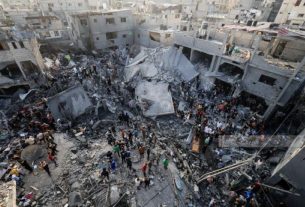
The Pentagon is drawing up plans for what officials have called a possible “final blow” in the ongoing war with Iran, according to a report by Axios citing U.S. and regional officials, according to The Express Tribune. The proposals include large-scale bombings, potential ground operations, and the occupation of key Iranian islands in the Persian Gulf, options described as “contingency planning” but revealing how dangerously close the conflict is to spiraling further.
While no decisions have been made, senior U.S. officials reportedly view a “show of overwhelming force” as a way to pressure Tehran back into negotiations. Yet, Iran insists it will not accept talks on anything but its own terms, deepening fears of a prolonged and devastating confrontation.
Diplomatic efforts are still flickering. Pakistan, Türkiye, and Egypt are quietly passing messages between Washington and Tehran, hoping to cool tensions. Pakistan’s Foreign Minister Ishaq Dar confirmed that indirect talks are taking place, clarifying that the discussions are limited to “message exchanges,” not formal negotiations. “Dialogue and diplomacy are the only way forward,” he said, adding that Iran is reviewing a 15-point peace plan shared by the United States.
Still, signs of compromise are scarce. Iranian officials have rejected U.S. proposals that would limit future attacks or give America strategic guarantees in the Gulf. “We seek an end to the war on our own terms,” said Iranian Foreign Minister Abbas Araqchi.
President Donald Trump, meanwhile, struck a defiant tone. On his social platform, he blamed NATO for “doing absolutely nothing” to help in the fight against Iran. “The USA needs nothing from NATO,” Trump declared, calling this a “very important point in time.” His comments mark another sharp turn in Washington’s relations with its allies, several of whom say the U.S. acted alone when launching attacks in late February that ignited the current crisis.
The fighting itself shows no sign of slowing. Israel reportedly targeted Alireza Tangsiri, commander of Iran’s Revolutionary Guard Navy, in an airstrike on Bandar Abbas, a key port on the Strait of Hormuz. Both Tehran and Jerusalem have remained silent on the outcome. Iran has responded with its latest wave of strikes “named Operation True Promise 4” firing missiles and drones at Israeli-linked facilities and U.S. bases across the region.
The war’s human and economic cost is already staggering. In Abu Dhabi, debris from an intercepted missile killed two and injured three others. Across the globe, oil prices have surged as the Strait of Hormuz through which nearly a fifth of the world’s fuel supply passes, has been effectively closed. Airlines, farmers, and supply chains worldwide are reeling, with the World Food Programme warning that millions could face hunger if fighting continues into summer.
At the United Nations, Secretary-General António Guterres issued a stark plea: “The world is staring down the barrel of a wider war. It is time to stop climbing the escalation ladder and start climbing the diplomatic ladder.”
Yet in Washington, preparations continue. According to Reuters, thousands more U.S. airborne troops are being deployed to the Gulf alongside Marine units already en route. Officials say they are giving President Trump “every possible option,” from deterrence to direct invasion. “If Iran fails to accept the reality of the current moment,” said one U.S. defense adviser, “the President is prepared to unleash hell.”