Pakistan Court Sentences PTI Leaders in May 9 Case, Stirring Debate Over Justice and Political Rights
A court verdict in Pakistan has reignited intense debate about the state of justice, political freedom and the independence of institutions in the country. On Saturday, an Anti-Terrorism Court (ATC) in Rawalpindi sentenced 47 proclaimed offenders linked to the Pakistan Tehreek-e-Insaf (PTI) to 10 years in prison each in connection with the May 9 attacks on the General Headquarters (GHQ) and other military installations, according to The Express Tribune.
The decision, announced by Judge Amjad Ali Shah, also imposed a fine of Rs500,000 on each convict and ordered the confiscation of their movable and immovable properties. The court ruled that the accused, many of whom were tried in absentia, must surrender within 60 days, by May 7, after which their convictions could be annulled and the cases reheard on merit.
Among those named in the verdict are several prominent PTI leaders, including Omar Ayub Khan, Shibli Faraz, Shahbaz Gill, Zulfi Bukhari, Murad Saeed, Zartaj Gul, Hammad Azhar, and Kanwal Shauzab.
The case stems from the violent protests that erupted across Pakistan on May 9, 2023, following the arrest of former prime minister Imran Khan. Demonstrators attacked military sites, government property and police installations in several cities. Authorities say the attacks on the GHQ gate, Hamza Camp, the Army Museum and the Sixth Road Metro Station were part of a coordinated plan.
According to the court’s written ruling, a Joint Investigation Team concluded that the accused played a role in planning the unrest. Because they had remained absent from proceedings for nearly two years, they were declared proclaimed offenders and tried separately under the Anti-Terrorism Act.
However, the verdict has been fiercely criticised by PTI and by many observers who see it as part of a wider crackdown on political opposition in Pakistan.
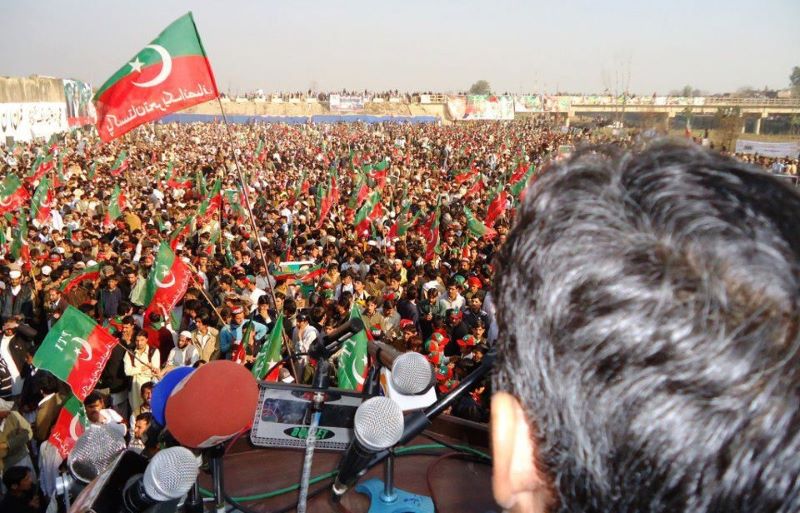
In a strongly worded statement, PTI called the decision a “regrettable chapter in the country’s political history” and described it as a clear example of political retaliation rather than justice. The party argued that the May 9 events have been used to build a narrative against its leadership and workers, resulting in arrests, prosecutions and restrictions on political activity.
“The reality is that these incidents have been exploited to crush an entire political party,” the party said, adding that its struggle remains rooted in constitutional and peaceful democratic principles.
Human rights groups and international observers have also raised concerns about the broader political climate in Pakistan. Several organisations have warned about shrinking democratic space, restrictions on freedom of expression, and the targeting of opposition figures.
Global watchdogs such as Amnesty International and Human Rights Watch, as well as statements from United Nations human rights bodies, have previously urged Pakistani authorities to ensure fair trials, due process and the protection of political rights. Some international forums, including voices within the Commonwealth and European institutions, have also expressed concern about the treatment of opposition leaders and the condition of democratic institutions in the country.
Critics argue that Pakistan’s judiciary has increasingly come under pressure from the country’s powerful military establishment, raising questions about the independence of courts in politically sensitive cases involving PTI leaders.
For supporters of the party, the verdict symbolises what they describe as a “mockery of justice” designed to silence dissent. For the government and security authorities, however, it represents accountability for attacks on state institutions.
As the legal battle continues and appeals are expected, the case has become more than a courtroom drama. It now stands at the centre of a larger national conversation about democracy, freedom of expression and the rule of law in Pakistan.