Bangladesh; A Year After Hasina’s Fall, Bangladesh Marks Turning Point with Protests, Promises, and Democratic Hopes
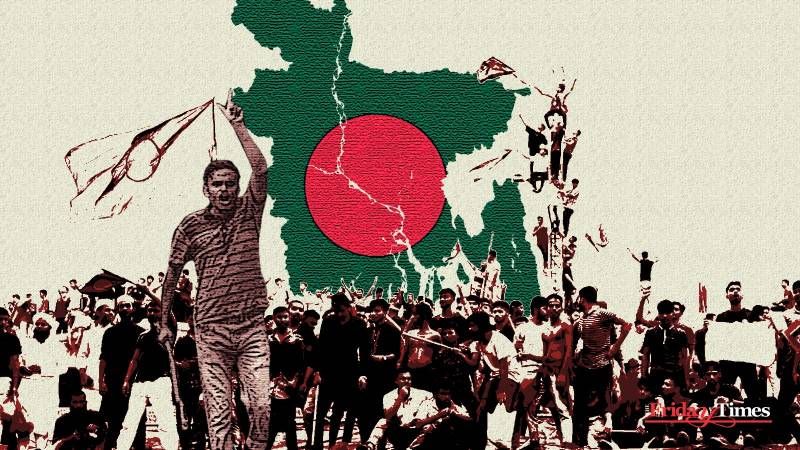
DHAKA – One year after the dramatic ousting of Prime Minister Sheikh Hasina, thousands of jubilant Bangladeshis flooded the streets of Dhaka on Tuesday in rallies, concerts, and prayer vigils to commemorate a popular uprising that has reshaped the nation’s political future.
The day’s events, marking the first anniversary of the 2024 student-led revolution that forced Hasina into exile, culminated in the unveiling of the “July Proclamation”—a sweeping charter for political and constitutional reform. Interim leader and Nobel Peace Prize laureate Muhammad Yunus, now heading the caretaker government, stood before the cheering crowd outside Parliament and declared, “Together, we will build a Bangladesh where tyranny will never rise again.”
The July Proclamation, now set to be added to the constitution, affirms the legitimacy of the uprising and commits the state to a roadmap for free and fair elections, rule of law, and the overhaul of democratic institutions.
From Uprising to Governance
The uprising, sparked by student protests over public sector job quotas, escalated into nationwide unrest that climaxed on August 5, 2024, when demonstrators stormed Hasina’s official residence. Hasina, who had ruled Bangladesh for 15 years, fled by helicopter and later surfaced in India, where she remains defiant amid ongoing war crimes charges.
“Even after all the bloodshed and sacrifice, a truly liberal democracy in Bangladesh still feels like a distant dream,” said Sabbir Ahmed, a college student from Jamalpur who joined last year’s protests. “But today feels like a step forward.”
Yunus acknowledged the ongoing challenges in a national address. “Fallen autocrats and their self-serving allies remain active,” he warned. “We must stand united to protect the gains of the revolution.”
He also paid tribute to those who died in the protests, vowing swift justice for the perpetrators of the so-called “July killings”—a series of violent crackdowns that left dozens dead.
Pledge for Elections in 2026
In a major announcement, Yunus confirmed that he would formally request the Chief Election Commissioner to hold general elections in February 2026, ahead of the holy month of Ramadan. “We will step into the final and most important phase—handing power to an elected government,” Yunus said.
While the interim government had initially suggested April 2026 as a possible date, increasing public and political pressure prompted the shift. “I urge you all to pray for us so that we can hold a fair and peaceful election,” Yunus added.
He emphasized that the interim government would ensure that elections are “celebratory in spirit” and fully transparent.
Yunus, now 85, has pledged to step down after the elections. His caretaker administration includes a mix of technocrats, civic leaders, and former bureaucrats and is currently in dialogue with political parties and civil society to build consensus on institutional reforms.
A Nation in Transition
While the atmosphere in Dhaka was largely celebratory, police remained on high alert across the capital. Armored vehicles patrolled key areas, and security forces maintained a heavy presence near potential flashpoints.
Authorities remain wary of disruptions by the now-banned Awami League, once led by Hasina. Her supporters continue to claim she was unjustly ousted, and international observers have noted the polarized political climate.
Despite these tensions, the Bangladesh Nationalist Party (BNP)—led by former prime minister Khaleda Zia—has endorsed the July Proclamation. Other smaller parties and civil society groups have also expressed cautious optimism about the country’s democratic trajectory.
“We finally have a chance to reset the system,” said Professor Ruma Nahar, a political analyst at Dhaka University. “But the next 18 months will determine whether this opportunity becomes a legacy or another false dawn.”
Hasina Breaks Silence from Exile
In an open letter released from her residence in New Delhi, Hasina addressed the people of Bangladesh for the first time in months. “Let this anniversary not be a day of retrospection, but a rallying cry for a brighter tomorrow,” she wrote.
Hasina insisted she had “never resigned” and accused the interim government of staging a “power grab masked in reform.”
Her letter ended defiantly: “Bangladesh has overcome adversity before, and we will rise again—stronger, more united, and more determined to build a democracy that truly serves its people.”
Looking Ahead
Despite concerns about political volatility, many Bangladeshis see this anniversary as a moment of collective catharsis—and a rare second chance.
As Yunus addressed the nation under rainy skies, echoing voices of hope rippled through the crowd. “Let us stand united beyond all divisions to confront and defeat these threats,” he said. “The sacrifice of thousands has gifted us this rare opportunity for national reform—and we must protect it at all costs.”